Bagno Marino La Lanterna (Pedocin) in Trieste, Italy: The Seaside Bathing Guide
Bagno Marino La Lanterna, known to everyone in Trieste as the Pedocin, is the city's historic public bathing establishment on the Adriatic seafront in north-east Italy, and this guide covers what it is, when to swim, and how the bora wind shapes a day on the Trieste coast.
Short answer
The Pedocin is Trieste's historic public sea bathing establishment on the city's waterfront in Italy. The sea off Trieste is warmest in July and August at a monthly mean of 25.9 C, and comfortably swimmable conditions generally run from June into early October. There is no published wind threshold at which swimming is called off, so check the forecast before you go.
Trieste, in the Friuli Venezia Giulia region of north-east Italy, is a port city whose relationship with the sea is unusually public: the waterfront is open, walkable and swum in, and the place that anchors that habit is Bagno Marino La Lanterna, universally called the Pedocin. It is a working bathing establishment rather than a monument, which is exactly why it matters. This guide, written for Trieste Travel Guide, sets out what the Pedocin is, when the water off Trieste is actually warm enough to swim in, how the bora wind shapes any day on this coast, and what else sits within easy reach along the seafront, using the regional weather agency's own station tables for the numbers rather than folklore.
What Is the Pedocin in Trieste, Italy?
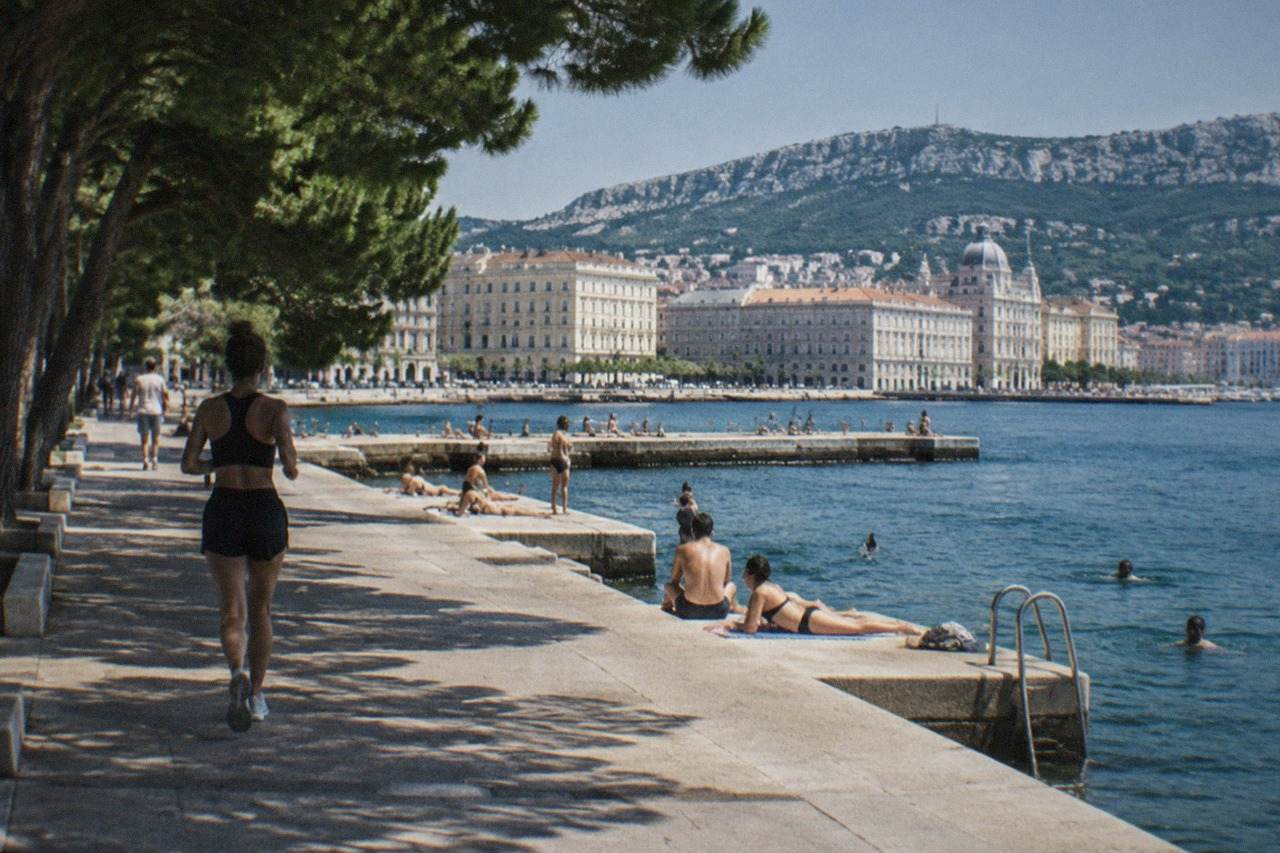
Bagno Marino La Lanterna, called the Pedocin by everyone in Trieste, is the city's historic public sea bathing establishment, a seawater bathing complex on the Adriatic waterfront that has served local swimmers for generations. It is not a beach club for tourists and not a museum piece: it is where the city actually swims, with sea access from fixed platforms rather than from sand.
The name is the first thing to untangle. "La Lanterna" refers to the small historic lantern tower on this stretch of the waterfront, and "Pedocin" is the local name that has stuck to the bathing establishment itself. Ask a Triestine for La Lanterna and you may be directed to the tower; ask for the Pedocin and you will be sent to the baths. Both names describe the same small corner of the seafront, at the end of the city's waterfront ribbon that runs from the port areas through the central Rive.
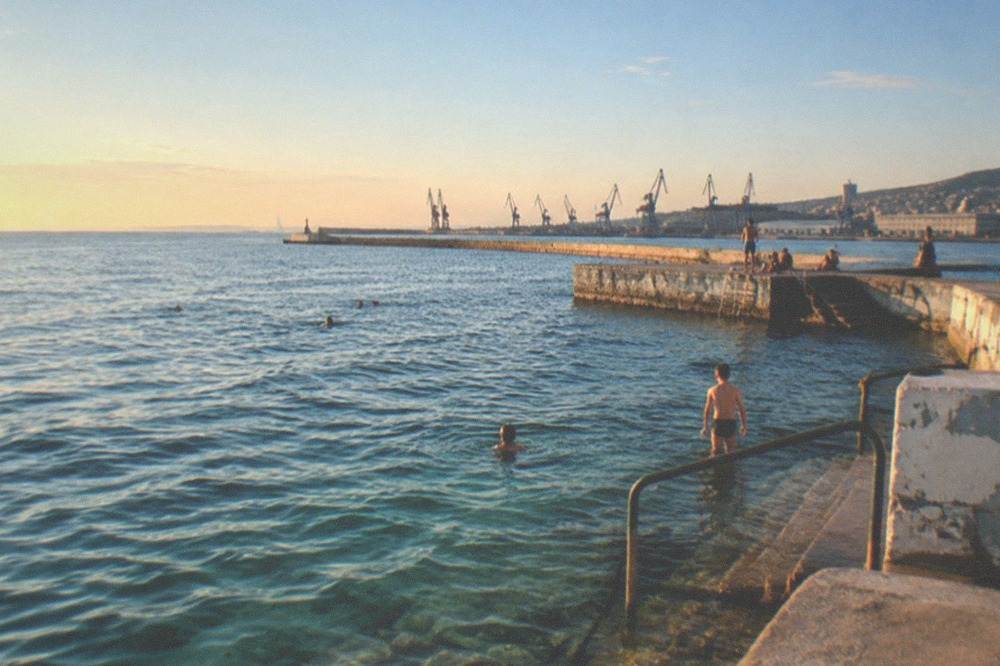
What distinguishes the Pedocin from an ordinary beach is its structure. Trieste's city waterfront has almost no sand: the shore here is built, with stone and concrete giving swimmers direct access to clean, deep Adriatic water. The Pedocin formalises that arrangement into an establishment with designated bathing areas, changing facilities and a walled, protected relationship with the sea. The most distinctive feature, and the one the establishment is known for across Italy, is that it maintains a women-only bathing section alongside its mixed section, a tradition rooted in the establishment's long history and preserved to this day. It is one of the last places on the Italian coast where that arrangement survives.
The other thing to understand before you go is that the Pedocin is deliberately unglamorous. This is not a lido with sun loungers for rent by the hour and a waiter circling with drinks. It is a swimming institution: people come to swim lengths, to sunbathe on the flat rocks and platforms, to socialise, and to follow a routine their grandparents followed. That character is the attraction. If you want a resort experience, Trieste's coast offers other options, and the Barcola seafront is the free, informal alternative a short way up the coast.
Where Is the Pedocin and How Do You Reach It from Central Trieste?
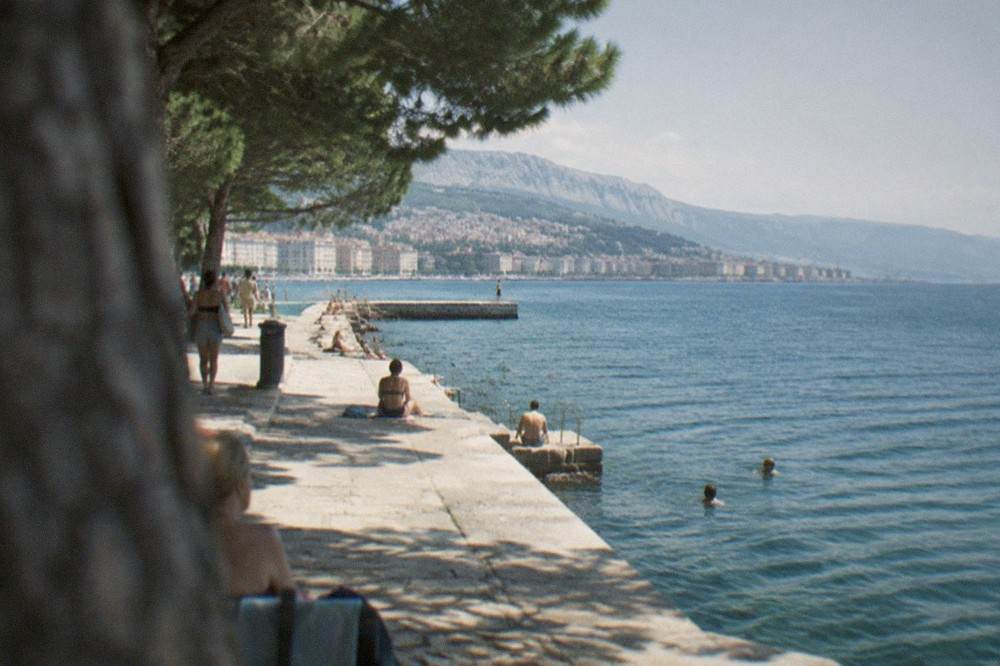
The Pedocin sits on Trieste's seafront, at the far end of the waterfront from the port, below the Victory Lighthouse end of the coast, and it is reached on foot along the seafront promenade or by the city's urban bus network with a standard Trieste Trasporti ticket. From Piazza Unità d'Italia the walk follows the water the whole way. There is no need for a car, and none for a tour transfer, to reach a bathing establishment inside the city.
The practical route is simple: find the water and follow it. Trieste's waterfront is a continuous, walkable ribbon, and the central stretch of it, the Molo Audace pier and the Rive, is the city's most obvious landmark run. From there the seafront continues towards the lighthouse end of the coast, and the Pedocin sits in that direction, in the shadow of the Victory Lighthouse, the Faro della Vittoria, which closes the waterfront's view from the central squares. The establishment is small and its entrance is modest, so it is easier to find by walking the seafront than by searching for a sign.
Urban transport covers the same ground. Trieste's buses run on the ordinary urban tariff: the 2026 tariff sheet lists a 60-minute single at €1.50, a 75-minute single at €1.85, a day ticket at €3.35, a 10-ride carnet at €13.50 and a 20-ride carnet at €16.65, and contactless bank cards can be tapped directly on board, with the system applying the cheapest applicable fare. Single tickets are valid for 60 or 75 minutes, extended to 240 minutes on Sundays and public holidays. That is the whole cost of reaching the baths from anywhere the urban network serves, and the same tickets are valid on the Opicina tram, line 2, which runs from piazza Dalmazia up to the Karst village of Opicina if you want to pair a swim with a ride on the city's hill railway.
For orientation, the principle is simple: the sea is always south-east of the city grid, so downhill and towards the water is always the correct first move. The Piazza Unità d'Italia square is the anchor point from which the whole waterfront reads clearly.
If your plan for the coast is bigger than a swim inside the city, the guided options that start from Trieste and follow this shoreline are worth comparing early, because the best of them sell out in the shoulder season.
The kayak option in that band is the one that treats this same water as its playground: the listing describes a three-hour guided paddle along the coast beneath the Duino castles, rated 4.9 from 11 reviews and priced from $76.81 per person. Check availability if a swim off the platforms whets your appetite for the open coast.
When Can You Actually Swim at the Pedocin? The Season, from ARPA's Own Data
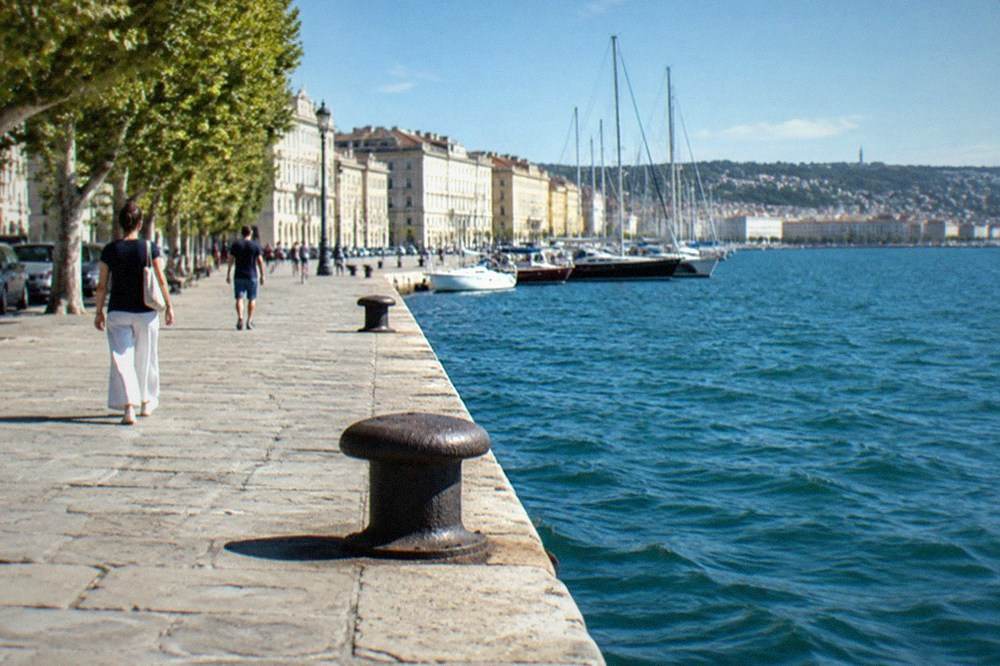
The sea off Trieste reaches a monthly mean of 25.9 C in both July and August, and comfortably swimmable conditions, with sea temperatures above roughly 20-22 C, generally run from June into September and early October. June averages 23.1 C, September 23.9 C and October 20.3 C, so early autumn is often warmer in the water than early summer at the same air temperature, because the sea retains heat through a seasonal lag. The coldest water is February's 10.5 C monthly mean.
Those figures come from the sea-temperature series for the Gulf of Trieste, which is a different dataset from the air-temperature station on the molo, and the two are worth keeping apart when you read any Trieste weather claim. The asymmetry in the numbers is the part most visitors miss: people assume the swimming calendar tracks the air, when in fact September's water (23.9 C mean) is warmer than June's (23.1 C mean), and the sea holds its heat well past the point where the evenings have cooled. A warm, still day in late September is often a better swimming day than a blustery one in mid-June.
| Month | Mean sea temperature (C) | Mean air temperature (C) | Swimmable comfort |
|---|---|---|---|
| January | 11.6 | 7.1 | No, cold water |
| February | 10.5 | 7.4 | No, the year's coldest sea |
| March | 11.6 | 10.4 | No, cold water |
| April | 14.0 | 14.0 | Marginal, hardy swimmers only |
| May | 17.9 | 18.8 | Marginal, improving fast |
| June | 23.1 | 23.1 | Yes, comfortably swimmable |
| July | 25.9 | 25.2 | Yes, the warmest water |
| August | 25.9 | 25.2 | Yes, the warmest water |
| September | 23.9 | 21.2 | Yes, often the best month |
| October | 20.3 | 17.1 | Yes, early in the month |
| November | 16.8 | 12.5 | Marginal to no, cooling |
| December | 13.6 | 8.5 | No, cold water |
One caution that belongs in any honest Trieste swimming guide: the long-term series shows the Gulf of Trieste's sea temperatures on a clear warming trend, with annual means up by roughly a degree or more against baselines from the late 1990s. That means older guidebooks, and any article quoting them, understate today's water temperatures, particularly in the shoulder months. The best time to visit Trieste guide carries the same data in more depth for trip planning.
The bathing establishment's own opening calendar is a separate question from the water temperature, and it is set by the operator rather than by the season: check the current arrangement at the gate or on the municipal information channels before planning a swim outside the June-September core. Do not assume the establishment is open every day of the year because the sea is swimmable, and do not assume it is closed in October because the summer crowds have gone.
What Are the Facilities Like at the Pedocin?
The Pedocin offers fixed sea access from stone and concrete rather than a sandy beach, with bathing platforms over deep, clean water, changing facilities, and its famous division into a women-only section and a mixed section. It is a swimming establishment in the old public-baths sense: functional, unpretentious and built around the water itself rather than around leisure services. Current admission arrangements and any charges are posted at the entrance, and this guide deliberately quotes no gate price because none is verified on an official current source.
The platforms are the heart of the experience. Triestine swimmers do not wade in from sand: they walk out on flat stone and concrete, set down towels on the warm rock, and swim off the edge into water that deepens quickly. Locals call the sunbathing spots by their own name, and the culture of the place, morning regulars, swimming lengths parallel to the shore, coffee afterwards in the city, is the real show. The women-only section is the feature that gives the establishment its national reputation: it is one of the last surviving women-only public bathing areas on the Italian coast, a tradition maintained continuously and treated in Trieste as a normal fact of civic life rather than a curiosity.
What you will not find is a resort inventory: no waiter service on the platforms, no water sports rental desk inside the establishment, no spa. The budget-travel logic applies here more than anywhere else in the city, because the Pedocin's whole identity is affordable public bathing. Bring your own towel, your own water, and the expectation that you are sharing the platforms with people who swim here several times a week and have strong opinions about where to sit.
The contrast with the alternatives is worth knowing. Barcola, the free seafront up the coast, is the informal option: same sea, same platforms-and-rocks arrangement, no facilities and no entry arrangement at all. The Pedocin is the formalised version, with the sections, the changing rooms and the institution behind them. Families and swimmers who want structure choose the Pedocin; people who want to wander in and out of the water on a long walk choose Barcola.
Is the Pedocin Good for Families and Children?
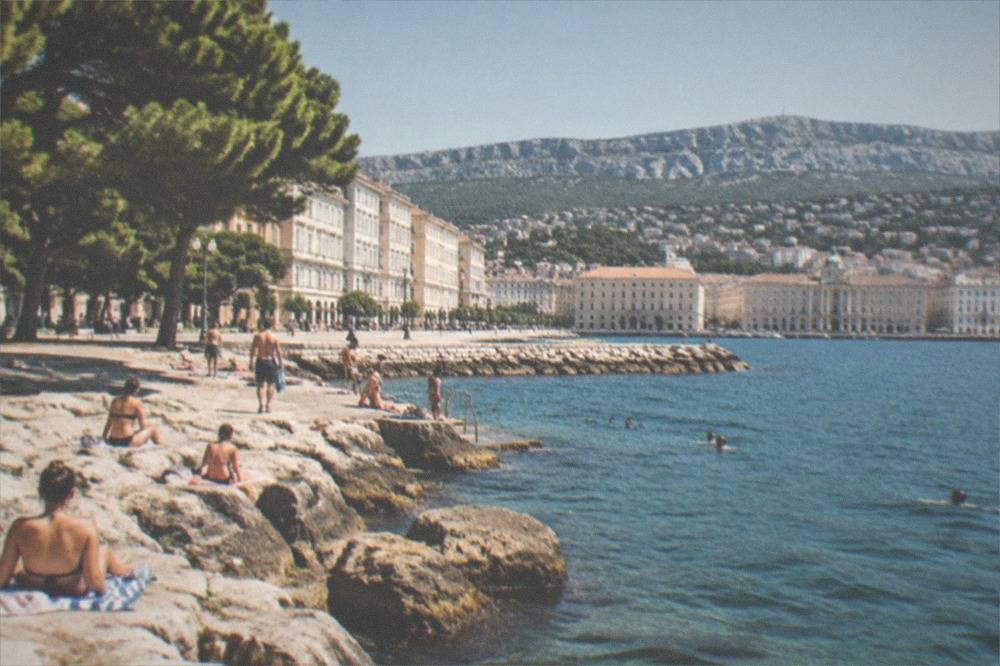
The Pedocin works well for families who want supervised, structured sea bathing rather than open beach play: the sections, the platforms and the changing facilities give children a contained environment, and the water off the platforms is the same clean Adriatic that the whole city swims in. It is not a sandy playground, so toddlers who need sand to dig will do better elsewhere, and the platforms' direct access to deep water means confident swimming or close supervision is the rule.
The honest framing for a family visit is that Trieste is a platform-and-rock swimming city, full stop. There is no sandy city beach, and every swimming option, from the Pedocin to Barcola to the Topolini platforms along the seafront, shares the same design: flat rock, an edge, and the sea. What the Pedocin adds for a family is containment and facilities, which matters more with children than any amount of sand. The women-only section is also, for many local families, part of the point: mothers and daughters use it as a matter of routine, and it is one of the few places on any coast where that tradition is preserved rather than commercialised.
For a full family day in the city, the Trieste with kids, a family itinerary guide places the seafront in a wider route, and the swimming in Trieste, where locals go guide covers the whole swimming map. The practical family sequence on a warm day is the one the city itself follows: swim in the morning while the sea is calm and the platforms are quiet, eat in the city at midday, and walk the seafront in the late afternoon when the bora, if it is blowing at all, is at its most photogenic and least inconvenient.
One seasonal note that matters for planning: the sea's warmth lags the air, so a warm day in May does not mean warm water (17.9 C monthly mean), and a cool-seeming day in late September often sits over the year's second-warmest water (23.9 C). Families booking shoulder-season trips should weight September heavily.
What Is the Bora, and Does It Stop You Swimming at the Pedocin?
The bora is a cold, dry north-easterly wind that funnels down onto the Gulf of Trieste, and it is the single weather fact that shapes this coast: ARPA's station tables for Trieste's molo record an average of 49 days a year with a gust over 72 km/h and 17.6 days with a gust over 90 km/h, with the all-time series peak at 168.1 km/h in February 2012. There is no officially published wind threshold at which bathing areas close or swimming is forbidden.
The wind is not an occasional nuisance in Trieste; it is a civic institution, with its own name in every local weather forecast and its own handrails in the exposed parts of the city. It blows from the east-north-east, it is strongest and most frequent in the cool season from November to March, peaking in February, and it can persist for days at a stretch. In summer it is rarer and weaker, and June is statistically the calmest month of the year, which is one more quiet argument for early-summer swimming here. The famous local lore that strong bora episodes favour odd numbers of days is exactly that, lore, and no verification of it exists in any of the agency's materials.
The numbers worth carrying in your head, all from the station tables for the molo Fratelli Bandiera, series 1995-2024:
| Month | Days with a gust over 72 km/h | Days with a gust over 90 km/h | Record gust for the month (km/h) |
|---|---|---|---|
| January | 5.5 | 2.4 | 148 |
| February | 6.0 | 2.9 | 168 |
| March | 4.9 | 2.1 | 163 |
| April | 3.5 | 0.7 | 123 |
| May | 2.7 | 0.7 | 120 |
| June | 2.2 | 0.3 | 110 |
| July | 3.3 | 0.9 | 125 |
| August | 2.9 | 0.9 | 124 |
| September | 3.5 | 1.1 | 124 |
| October | 4.0 | 1.4 | 126 |
| November | 5.2 | 1.9 | 147 |
| December | 5.3 | 2.3 | 133 |
Read that table the way a swimmer should: the monthly record gust exceeds 110 km/h in every single month of the year, so a strong bora day is possible even in July, but the average number of strong days collapses in the May-August window. The practical implication for the Pedocin is that summer swimming is usually calm-water swimming, and the wind is a winter story that summer visitors mostly meet as a bracing morning breeze. The full story, including the physics and the culture, is in the site's bora wind guide.
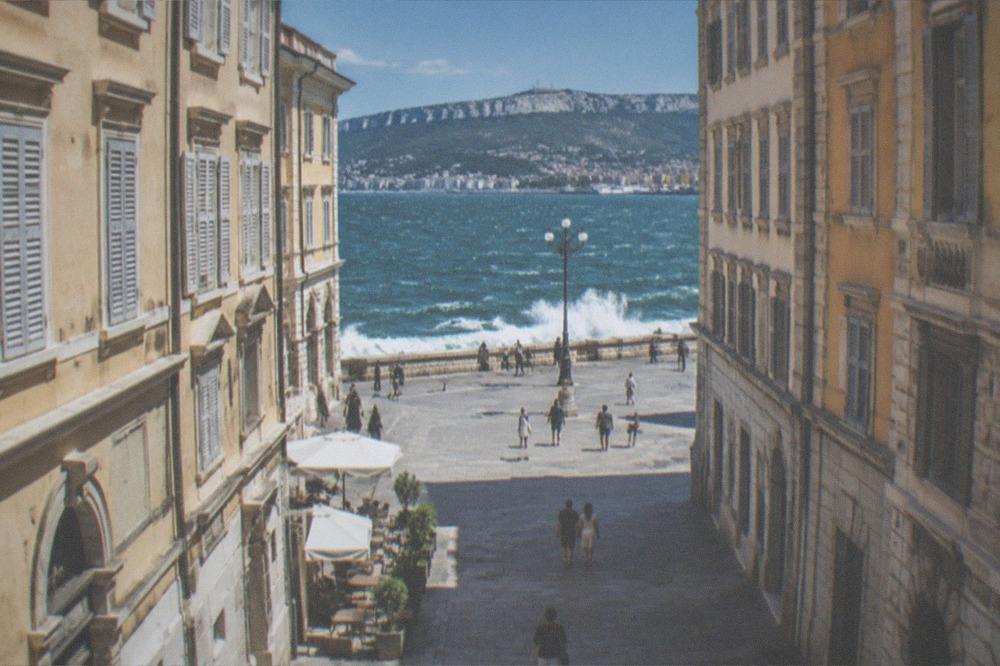
Two things this guide will not do, because no primary source supports them: it will not print a wind speed at which the bathing areas or the seafront close, because no such published cutoff exists in any official Trieste or agency document, and it will not repeat the older gust records you may have read elsewhere, because they are not in the agency's own station table. If a strong bora is forecast, the seafront itself is the spectacle: the waves breaking over the outer mole are the city's most dramatic free show.
What Else Is Near the Pedocin on the Trieste Seafront?
The Pedocin sits at the quiet end of a seafront that contains, in one continuous walk, the Molo Audace pier, the central Rive, Piazza Unità d'Italia opening directly onto the water, and the Victory Lighthouse above the bathing establishment, with the Barcola seafront continuing up the coast. The city's paid sights are a short distance inland: Miramare Castle's adult ticket is €17, San Giusto Castle's is €7, the Museo Revoltella's is €8, and the Risiera di San Sabba is free.
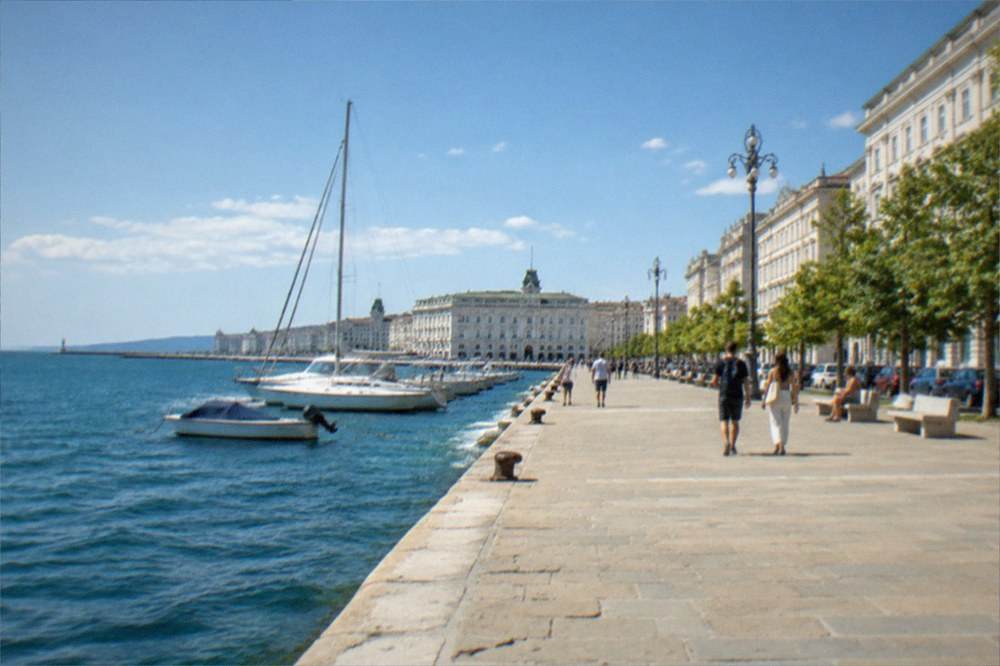
The seafront walk is the connective tissue of a Trieste day, and it is entirely free. Starting from the baths' end of the waterfront, the Victory Lighthouse stands above the coastline as the waterfront's monumental bookend; walking back towards the centre you pass along the Rive to the Molo Audace, the short pier that projects into the gulf and gives the city its favourite sunset viewpoint, and from there the open flank of Piazza Unità d'Italia runs straight off the water. Inland from the square, the grid climbs quickly to the Cathedral of San Giusto and the San Giusto Castle, whose €7 ticket covers the walls, the castle museum, the Lapidario and the temporary exhibitions.
| Sight | Direction from the seafront | Adult ticket | Hours summary |
|---|---|---|---|
| Victory Lighthouse (Faro della Vittoria) | Above the Pedocin end of the waterfront | Check the venue's page | Waterfront landmark |
| Molo Audace pier | On the central Rive | Free | Open seafront pier |
| Piazza Unità d'Italia | Directly off the central Rive | Free | Open public square |
| San Giusto Castle and hill | Short climb inland from the square | €7, reduced €5 | 1 April-11 Oct daily 10:00-19:00; from 12 Oct Tue-Sun 10:00-17:00 |
| Museo Revoltella | On the central waterfront | €8, reduced €6 | Daily 10:00-19:00, closed Tuesdays |
| Miramare Castle | Up the coast at Grignano | €17, park free | Every day 9:00-19:00, last admission 18:30 |
| Risiera di San Sabba | Inland, southern edge of the city | Free | 1 Mar-11 Oct daily 9:00-19:00; from 12 Oct daily 9:00-17:00 |
The inland options reward the effort. The Revoltella Museum, Trieste's modern-art museum, sits on the central waterfront itself and closes on Tuesdays, a detail that catches out visitors who plan a Monday-museum itinerary and arrive a day late. The Miramare Castle up the coast is the region's most visited monument, and its park is free all year even when the castle carries its €17 ticket, with park hours varying by month (April to September 8:00-19:00, January 8:00-16:00). The Risiera di San Sabba, the national monument at the city's southern edge, is free to enter and needs no booking for individuals. For the full swimming map beyond the city platforms, the Trieste beaches and swimming guide is the companion page.
That coast tour is the seafront's day-trip extension: the listing describes a relaxed five-and-a-half-hour guided excursion from Trieste along the Slovenian coast with food and wine tasting, rated 4.98 from 50 reviews and priced from $137.57 per person. It is the natural follow-on for anyone whose day at the Pedocin leaves them wanting more of this coastline, and it runs with transport from the city rather than requiring any planning of your own.
What Should You Pack for a Day at the Pedocin in Trieste?
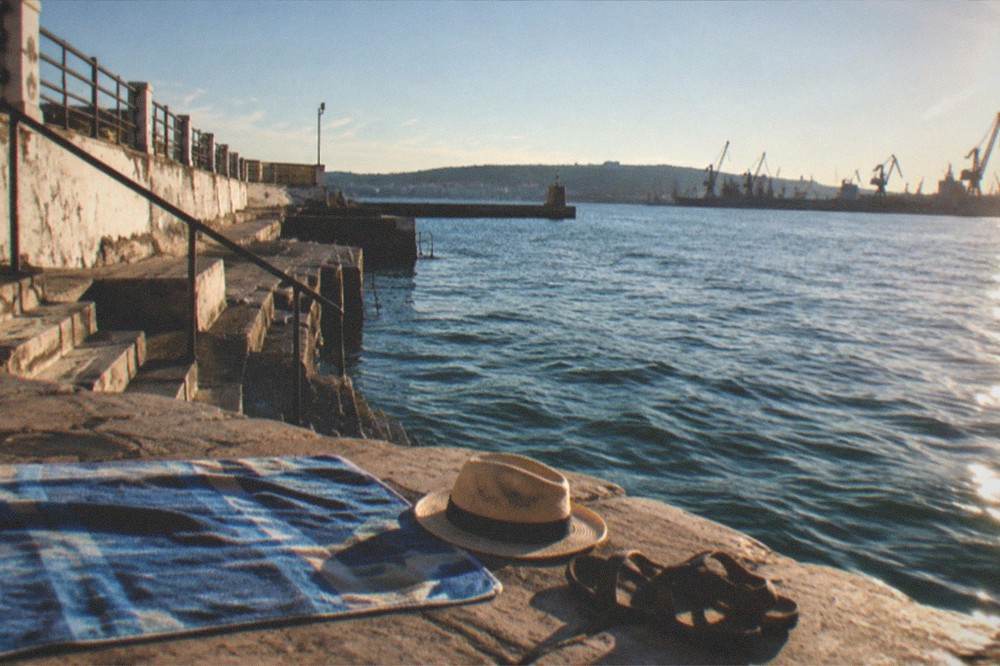
Pack for a built shoreline and a changeable coast: swimwear, a towel, flat shoes that grip wet stone, sun protection with nowhere to hide from it, and a layer for the wind, because even in July the monthly record gust at the molo is 125 km/h and the sea breeze turns cool the moment the sun drops. Air temperatures average 25.2 C in July and August with mean highs of 28.2 and 28.1 C.
The packing logic follows from the climate table, and the climate table is worth reading in full because it contradicts the Mediterranean stereotype people arrive with. Trieste is not the dry south: the annual rainfall at the waterfront station is 867.1 mm across 86.1 wet days, wetter than much of southern Italy, but the rain is concentrated in autumn, with November the wettest month at 109.8 mm and September second at 102.3 mm. Summer is the dry window, and July, at 53.8 mm, is one of the two driest months of the year. Anyone who tells you Trieste is a rainy summer city has the calendar backwards.
| Month | Mean high (C) | Mean low (C) | Rain (mm) | Wet days | What it means for the platforms |
|---|---|---|---|---|---|
| May | 21.7 | 16.1 | 75.0 | 8.5 | Warm air, cool sea |
| June | 25.8 | 20.2 | 62.5 | 6.1 | Prime swimming, calmest wind month |
| July | 28.2 | 22.4 | 53.8 | 5.4 | Peak season, second-driest month |
| August | 28.1 | 22.3 | 71.7 | 6.6 | Peak season, warmest water |
| September | 23.9 | 18.4 | 102.3 | 7.4 | Best water, first autumn rain |
| October | 19.6 | 14.8 | 88.6 | 7.6 | Swimmable early month, then done |
The one packing item no first-time visitor brings and every regular owns is windproof something. The bora does not blow hard in summer on average, but the sea breeze on any exposed platform is constant, and a swimmer wet from the Adriatic cools fast. Flat shoes matter more than they sound: the platforms and the surrounding rocks are stone, wet stone at that, and the walk from the changing areas to the water's edge is not a sandy shuffle. Sun protection is non-negotiable because there is no shade structure over the water, and the light off the gulf is doubled by reflection.
For the day around the swim, the free things to do in Trieste guide is the natural companion, since the seafront walk, the pier, the square and the park at Miramare are all free and all combine with a Pedocin morning. The transport arithmetic is simple too: a day ticket on the urban network at €3.35 covers the buses, and the seafront itself costs nothing to walk.
Of that band, the Piran tour is the one for swimmers who want a beach town at the end of it: the listing describes a six-hour scenic excursion from Trieste along the Istrian coast to Piran, rated 4.57 from 136 reviews and priced from $114.64 per person. The Slovenian coast tour in the same band adds food and wine to the same shoreline, and the kayak trip returns to the water itself.
A swim at the Pedocin and a day on the Istrian coast are the two halves of the same coastline, and the second is easier to book from Trieste than from almost anywhere else in Italy, since Piran sits just across the border on the same gulf.
Common Questions About the Pedocin in Trieste
What is the Pedocin in Trieste, Italy?
Bagno Marino La Lanterna, the Pedocin, is Trieste's historic public sea bathing establishment on the city's Adriatic waterfront. It offers bathing from stone and concrete platforms rather than a sandy beach, and it is known for maintaining a women-only bathing section alongside its mixed section, one of the last such arrangements on the Italian coast.
When is the sea warm enough to swim in Trieste?
The sea off Trieste averages 25.9 C in July and August, 23.1 C in June and 23.9 C in September, and comfortably swimmable conditions above roughly 20-22 C generally run from June into early October. September's water is warmer than June's because the sea retains heat through a seasonal lag.
Does the bora wind stop you swimming at the Pedocin?
There is no officially published wind threshold at which bathing areas close. The bora is strongest from November to March, peaking in February, and June is the calmest month of the year at the waterfront station. On a strong bora day the sea conditions speak for themselves and the platforms are no place to swim.
Is the Pedocin suitable for children?
It suits families who want structured, supervised sea bathing: the sections, platforms and changing facilities give children a contained environment. There is no sand, and the platforms give direct access to deep water, so confident swimming or close supervision is the rule, as it is along all of Trieste's built shoreline.
How do you get to the Pedocin from central Trieste?
Walk the seafront promenade towards the lighthouse end of the coast, or use the urban buses with a standard Trieste Trasporti ticket: the 2026 tariff lists a 60-minute single at €1.50 and a day ticket at €3.35, with contactless cards accepted on board. No car is needed for an establishment inside the city.
What is near the Pedocin on the Trieste seafront?
The Victory Lighthouse stands above the bathing establishment, and the walk back towards the centre passes the Molo Audace pier and Piazza Unità d'Italia on the water. Inland, San Giusto Castle (€7), the Museo Revoltella (€8, closed Tuesdays) and the free Risiera di San Sabba are all within the city, and Miramare Castle (€17, free park) sits up the coast.
The Pedocin is the honest version of Trieste: a public institution where the city swims off stone platforms in deep Adriatic water, next to a lighthouse, at the end of one of Italy's most walkable waterfronts. Go in the morning, swim while the sea is calm, and let the seafront walk and a caffè in the centre finish the day the way the city itself does.