Flights to Trieste, Italy: Airports, Transfers and What to Do Once You Land
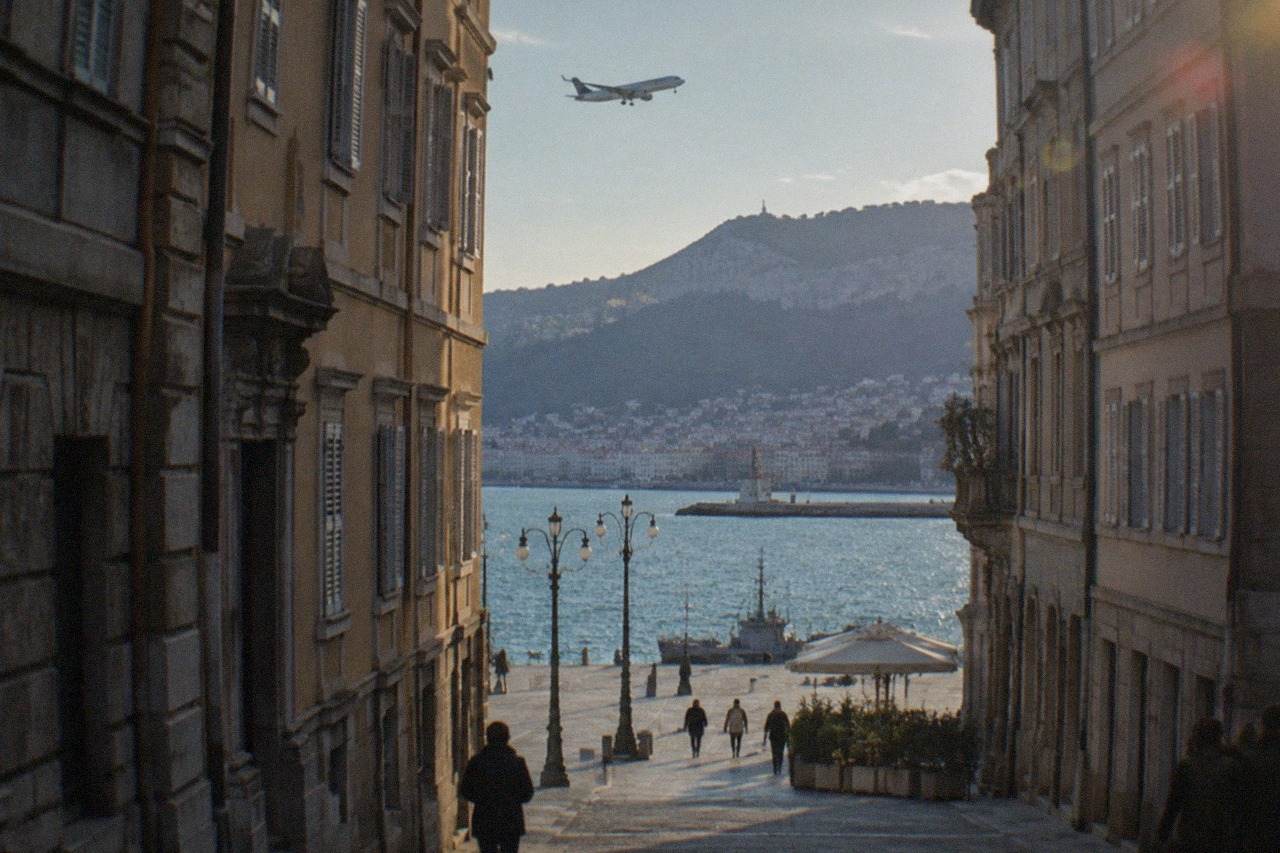
Trieste, the Adriatic port city in Friuli Venezia Giulia in the northeast corner of Italy, has its own airport at Ronchi dei Legionari, and it is better connected than most visitors expect: its own railway station sits a covered walkway from the terminal.
Short answer
Fly into Trieste Airport (TRS) at Ronchi dei Legionari, which has its own railway station linked to the terminal by a covered walkway of roughly 400 m, served by regional, Intercity and Frecciarossa trains. Venice Marco Polo is the main alternative for long-haul and low-cost routes, with direct trains and coaches onward to Trieste.
Trieste, the Adriatic port city in Friuli Venezia Giulia in the far northeast of Italy, has spent most of its tourist life being confused with other things: a bathyscaphe, a San Francisco cafe chain, an actress, a basketball club. This page is about the city, and about the practical question of getting a plane down onto the strip of coast it sits on. The short version is that Trieste has its own airport, it has its own railway station attached to that airport, and the whole arrival is easier than the city's low profile suggests.
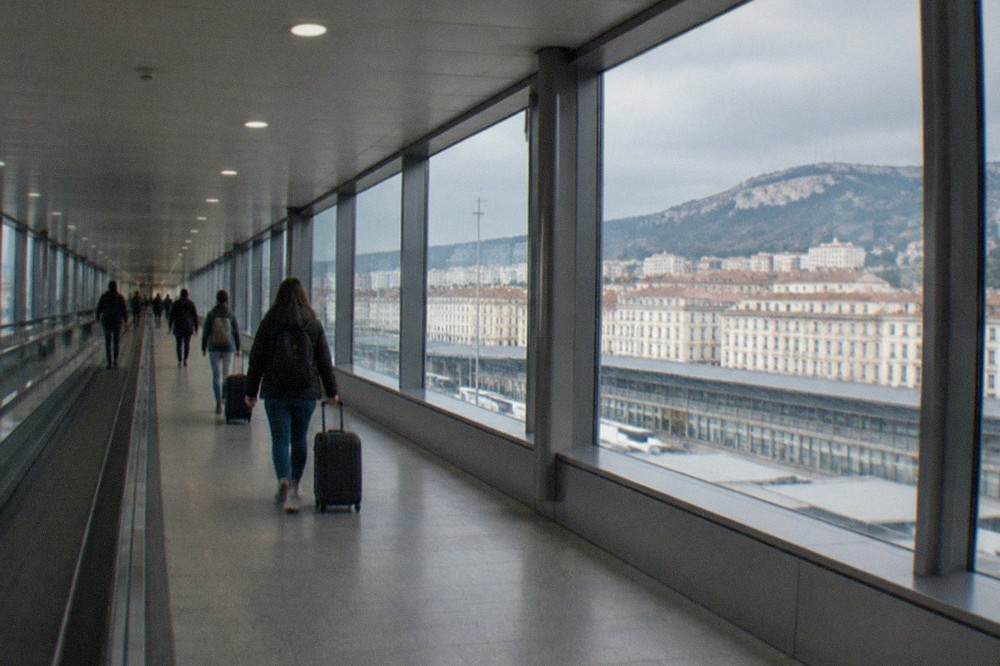
The airport is called Trieste Airport, code TRS, and it sits at Ronchi dei Legionari. It is not a large hub. What it is, unusually for a secondary Italian airport, is rail-connected: the station named Trieste Airport is joined to the terminal by a covered pedestrian walkway of roughly 400 m with moving walkways, and it is served by regional, Intercity and Frecciarossa trains, plus some international services. The bus alternative departs from the intermodal hub beside the terminal. That single fact changes the shape of a trip here, because it means the airport is not a taxi-or-nothing proposition. The full arrival picture, including the Venice alternative and what everything costs once you are down, is laid out below, and the site's own Trieste Travel Guide covers the city itself in depth.
Which Airport Do You Fly Into for Trieste, Italy?
You fly into Trieste Airport (TRS) at Ronchi dei Legionari, the city's own airport in Friuli Venezia Giulia, northeast Italy, which handles domestic and European routes and has its own railway station joined to the terminal by a covered walkway of roughly 400 m with moving walkways. Regional, Intercity and Frecciarossa trains, plus some international services, call there, and buses leave from the intermodal hub beside the terminal.
The station is the detail worth holding onto. Most small-city airports in Italy drop you at a curb and leave the last kilometres to a coach operator. Trieste Airport was built with the railway inside the arrival experience: the airport's own service charter describes the covered pedestrian link and the moving walkways, and the trains calling at the station include high-speed Frecciarossa services as well as regionals. The airport's own pages are the place to check the current list of destinations, because route maps at small airports change season by season and no verified destination list belongs in a static article.
For anyone connecting through another European hub, TRS is the honest answer to the search question. It is a compact airport, which cuts both ways: connections through it are few compared with Milan or Rome, but the walk from gate to station is short, and there is no long transfer between terminals because there is effectively one terminal. The site has a full page on this at Trieste Airport Ronchi dei Legionari, which goes deeper on facilities and layout than this flights overview.
What TRS does not have is long-haul traffic. If you are arriving from North America, Asia or anywhere outside Europe's short-haul network, you will almost certainly change planes once, and the realistic change points are the big hubs that feed TRS. That is normal for a city of Trieste's size, and the alternative covered below, Venice, is often the better long-haul plan.
How Do You Get from Trieste Airport to the City Centre?
From Trieste Airport you take the train from the airport's own station, a short regional train ride to Trieste Centrale, or you take a bus from the intermodal hub beside the terminal. The station is linked to the terminal by a covered walkway of roughly 400 m with moving walkways. The exact journey time and fare are not published on the operator's verified pages, so check the operator's own planner before flying rather than trusting a number quoted in a blog.
The train is the default for most visitors. Trieste Centrale is the city's main station, and the airport station is served by regional, Intercity and Frecciarossa trains, so the same ticket system that runs the rest of the Italian network runs this leg. Tickets are sold through the national rail operator's site and machines at the station. What this guide will not do is print a minutes figure or a fare for the ride: the verified sources do not state one, and invented transfer numbers are exactly how travel content goes wrong.
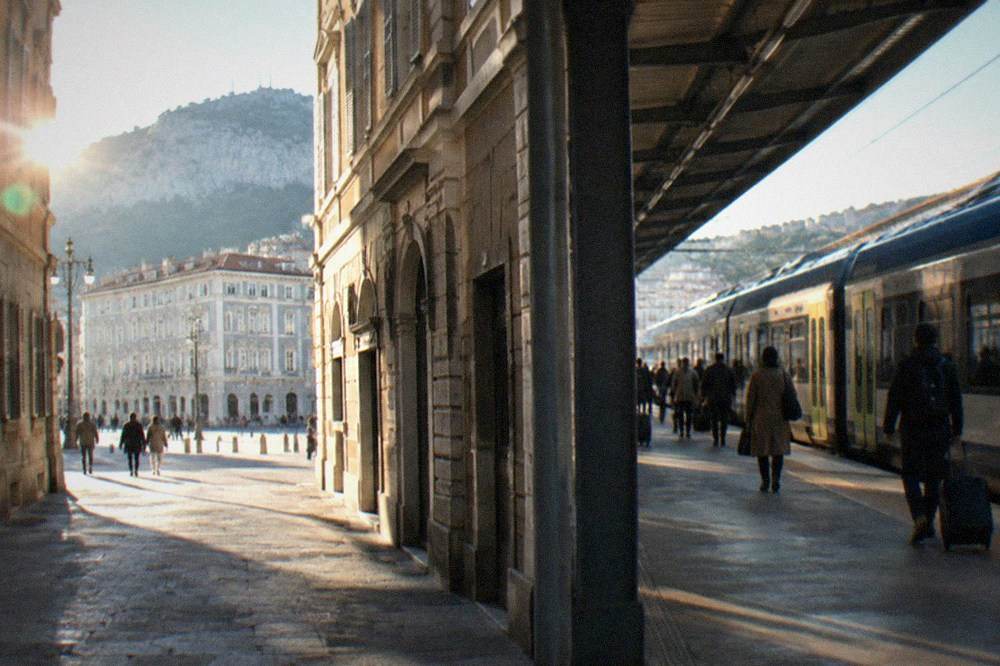
Once you are at Trieste Centrale, the city opens up quickly. The station sits at the edge of the Borgo Teresiano, the grid of Habsburg-era streets that makes up much of central Trieste, and the waterfront is close at hand. The full onward picture, including buses, the Opicina tram and taxis, is in Getting Around Trieste, and the rail connections beyond the city, to Venice, Ljubljana and points east, are covered in Trieste Train Station And Rail Connections.
If you are arriving with a day to spare before a cruise or a tour, it is worth knowing that the station-to-ship walk is a real thing in Trieste: the cruise port is close to the centre, and the site's Trieste Cruise Port Guide covers that arrival in detail. For everyone else, the practical move on landing day is simple: train in, drop bags, and walk.
The bus from the airport is the fallback, leaving from the intermodal hub beside the terminal, with regional lines and long-distance coaches serving it. The verified sources confirm the hub exists and what class of operator uses it, but not a timetable or a fare, so treat the operator's own route planner as the source of truth there too.
Is Flying Into Venice and Continuing to Trieste a Better Plan?
For long-haul arrivals and many low-cost routes, yes: Venice has the far wider route network, and Trieste is reachable from Venice by direct train from Venice Santa Lucia or by coach from Venice Marco Polo airport, with the airport-to-city connection documented on this site. The trade is a longer ground leg, and the train ride is a scenic one along the lagoon and lagoon-edge plain.
Venice Marco Polo is the airport most visitors from outside Europe actually end up using for Trieste, simply because of route density. The onward journey is the decision: the national rail operator runs the Venice-Trieste corridor with direct services from Venice Santa Lucia, and the airport's own connection into Venice Mestre, where the direct trains also call, is documented in Venice Airport To Trieste. Travellers who prefer to see the rail leg in detail before committing will find the full comparison in Trieste To Venice By Train, and the broader city-versus-city framing in Trieste Vs Venice.
The honest comparison is this: TRS wins on arrival simplicity, Venice wins on flight choice and price. A family flying from London in July may find either works; a traveller coming from New York will almost certainly route through Venice or a hub feeding TRS. The rail fare and journey time between the two cities are the numbers people ask for most, and the verified operator pages are where to read them, because they change with ticket type and season.
When Is the Best Time of Year to Fly to Trieste?
The best months to visit Trieste are late spring and early autumn: May averages a 21.7 C mean high with 75 mm of rain, September averages 23.9 C with 102.3 mm, and the sea is at its warmest in August at 25.9 C. July is the second-driest month of the year at 53.8 mm, and November is the wettest at 109.8 mm, so the dry-window logic that applies to most of Italy is inverted here, with autumn wetter than midsummer.
That last point is the one worth repeating, because almost every generic Italy guide gets Trieste wrong on it. The city's own station tables, from the regional meteorological agency's waterfront gauge, show November as the wettest month and July as one of the driest. Summer is not the rainy season here. The full month-by-month breakdown is in Trieste Weather Month By Month and Best Time To Visit Trieste, and the wind that shapes the shoulder seasons has its own page in The Bora Wind.
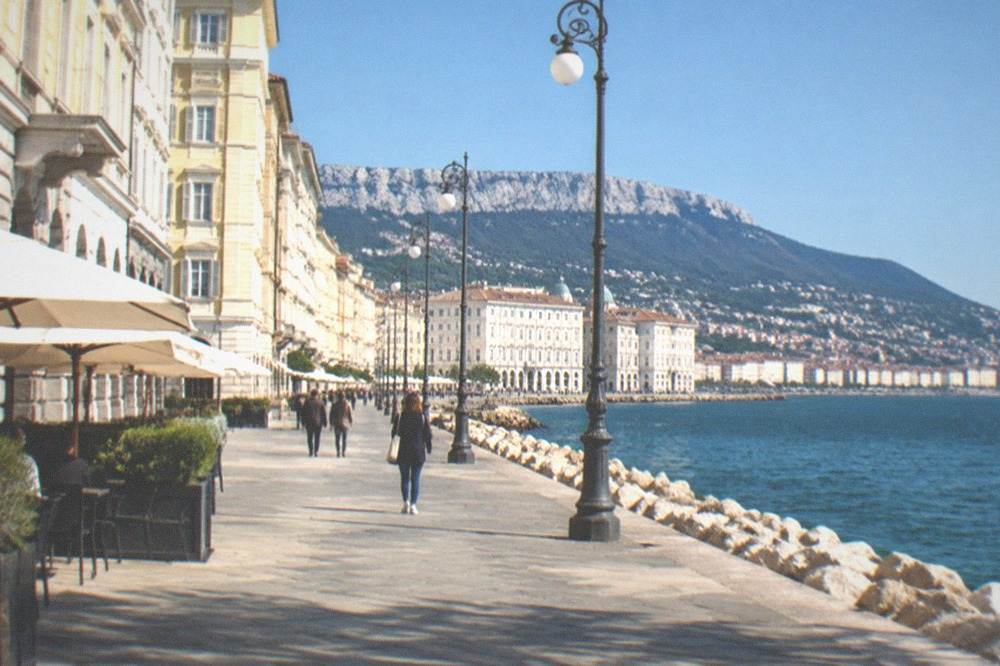
| Month | Mean high C | Rain mm | Sea C | Notes for flyers |
|---|---|---|---|---|
| May | 21.7 | 75 | 17.9 | Long daylight, mild sea |
| June | 25.8 | 62.5 | 23.1 | Swimmable, calmest wind month |
| July | 28.2 | 53.8 | 25.9 | Second-driest month of the year |
| August | 28.1 | 71.7 | 25.9 | Warmest sea, peak Italian holidays |
| September | 23.9 | 102.3 | 23.9 | Warm sea, wetter than July |
| October | 19.6 | 88.6 | 20.3 | Barcolana month, windy shoulder |
One dated event belongs in any October flight plan: the Barcolana regatta runs 2-11 October 2026, with the main race on Sunday 11 October, and it fills the city. The record entry was 2,689 boats in 2018, and the 2025 edition drew 1,865. If you are flying for it, book early; the full story is in The Barcolana Regatta.
What Does Arrival in Trieste Actually Cost on the Ground?
The city's own 2026 tariff sheet prices an urban single ticket at €1.50 for 60 minutes or €1.85 for 75 minutes, a day ticket at €3.35 and a 10-ride carnet at €13.50, with contactless bank cards tap-able on board. The tourist tax runs €1.50 to €3.80 per person per night depending on the accommodation class, charged for a maximum of five consecutive nights, and everyone under 18 is exempt.
Those transport figures come from the operator's published 2026 urban tariff sheet, and they make Trieste cheap to move around once you have landed. A single ticket's validity extends to 240 minutes on Sundays and public holidays, and the on-board readers accept Mastercard, Visa and American Express as well as digital wallets, applying the cheapest applicable fare. The same urban network includes the Opicina tram, line 2, which was reactivated on 1 February 2025 and runs from piazza Dalmazia, not from piazza Oberdan as older guides claim.
| Ticket | Code | Price |
|---|---|---|
| Urban single, 60 minutes | U01 | €1.50 |
| Urban single, 75 minutes | U02 | €1.85 |
| Day ticket | U24 | €3.35 |
| 10 rides | U10 | €13.50 |
| 20 rides | U20 | €16.65 |
The tourist tax is the other arrival cost that surprises people, because it is charged per night on top of the room rate. The 2026 table from the city's own finance department is below. The rate is capped at five consecutive nights in the same property, and the exemption list is broad: everyone under 18, people with a certified disability of 80% or more, one companion per hospital inpatient, coach drivers and tour leaders accommodated free, and one group leader per 15 minors.
| Rate per person, per night | Accommodation category |
|---|---|
| €3.80 | 5-star hotels |
| €3.30 | 4-star hotels and equivalent self-catering |
| €3.00 | 3-star hotels and equivalent self-catering |
| €2.30 | 2-star hotels, B&B Superior, hostels, short-let properties |
| €2.00 | B&B Comfort |
| €1.80 | 1-star hotels, B&B Standard |
| €1.50 | Campsites and equipped motorhome areas |
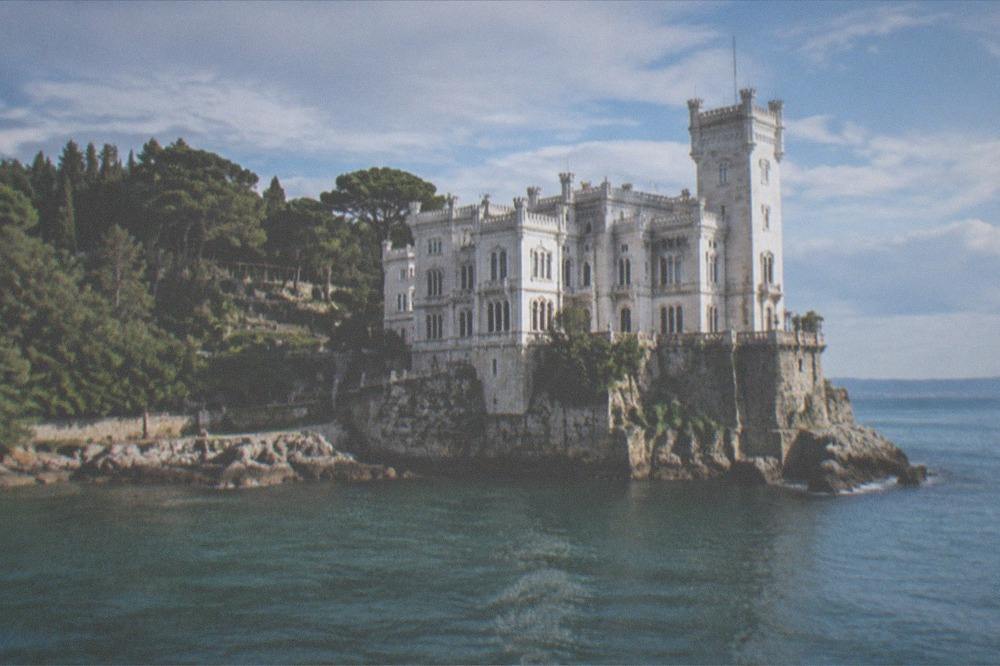
Attraction entry is the third column of the arrival budget. Miramare Castle is €17 for an adult including the temporary exhibition, and its park is free all year. San Giusto Castle is €7 full, €5 reduced. Museo Revoltella is €8. The Risiera di San Sabba is free. State and civic sites also run a first-Sunday-of-the-month free-entry scheme, but its rules have changed more than once, so check the venue's own page rather than a blog date.
| Site | Adult entry | Notes |
|---|---|---|
| Miramare Castle | €17.00 | Includes temporary exhibition; park free all year |
| Castello di San Giusto | €7.00 | Reduced €5.00; free first Sundays and 3 November |
| Museo Revoltella | €8.00 | Closed Tuesdays |
| Risiera di San Sabba | Free | Daily opening, extended hours March to October |
| Cattedrale di San Giusto | Free | Bell tower hours seasonal, no verified tower price |
| Grotta Gigante | €15.00 | Guided tours only, booking compulsory |
Grotta Gigante deserves its own flag for flyers: it is guided-only with compulsory booking, it runs Tuesday to Sunday from September to February and daily from March to August, and it closes on 25 December and 1 January. If a cave visit is on your list, the booking is the thing to sort before the flight, not after landing. The full site guide is at Grotta Gigante.
Do You Need a Passport for Day Trips After You Land?
Yes, carry a passport or national ID card even for a day trip into Slovenia, because Italy is running temporary internal border checks on its land borders with Slovenia from 19 June 2026 to 18 December 2026, per the European Commission's own register. Slovenia, Croatia and Italy all use the euro and all three are in Schengen, so there is no currency change, but the temporary checks mean documents can be asked for at this specific border right now.
This is the fact most likely to be wrong in a competing guide. Croatia joined Schengen and adopted the euro on the same day, 1 January 2023. Slovenia has been in both since 2007. But Schengen membership does not currently mean an unchecked drive out of Trieste: the Commission's register of temporary reintroduced controls lists Italy's land borders with Slovenia through 18 December 2026. Write that down as temporary and dated, not as a permanent feature of the region.
| Country | Euro since | Schengen since | Current border note |
|---|---|---|---|
| Italy | Founding euro member | Founding Schengen | Running temporary checks on Slovenia land border to 18 Dec 2026 |
| Slovenia | 1 January 2007 | December 2007 | No active controls listed with Croatia or Hungary |
| Croatia | 1 January 2023 | 1 January 2023 | Joined both the same day |
The practical payoff of Trieste's position is that three countries are within a day trip of your arrival gate. The site covers each in depth: Trieste To Ljubljana, Trieste To Piran, and the full index in Day Trips From Trieste.
What Should You Actually Do with Your First Day After Landing?
Start on the ground, not in a queue: Trieste's centre is walkable from the station area, Piazza Unità d'Italia is the seafront square to orient by, and the city's food and coffee culture is the fastest way into what makes it different from every other Italian city. A guided walking tour on day one costs from $50.44 per person on the operator's live listing and turns a jet-lagged afternoon into an oriented one.
The case for booking something for day one is simple: Trieste does not read like Rome or Florence, and its story, Habsburg port, coffee capital, border city, is easier to see with someone pointing at it. The site's overview of the city's fame is in Why Trieste Is Famous, its deeper history in A Short History Of Trieste, and the free, tip-based walking options, including the GuruWalk pay-what-you-want city walks run by local gurus, are listed in Free Walking Tours In Trieste.
The Jewish heritage walk above is one of the more distinctive orientations available: Trieste's port history made it a gateway city, and that walk covers a heritage most Italian cities do not have. The listing prices it per group of up to three, and it runs about three hours.
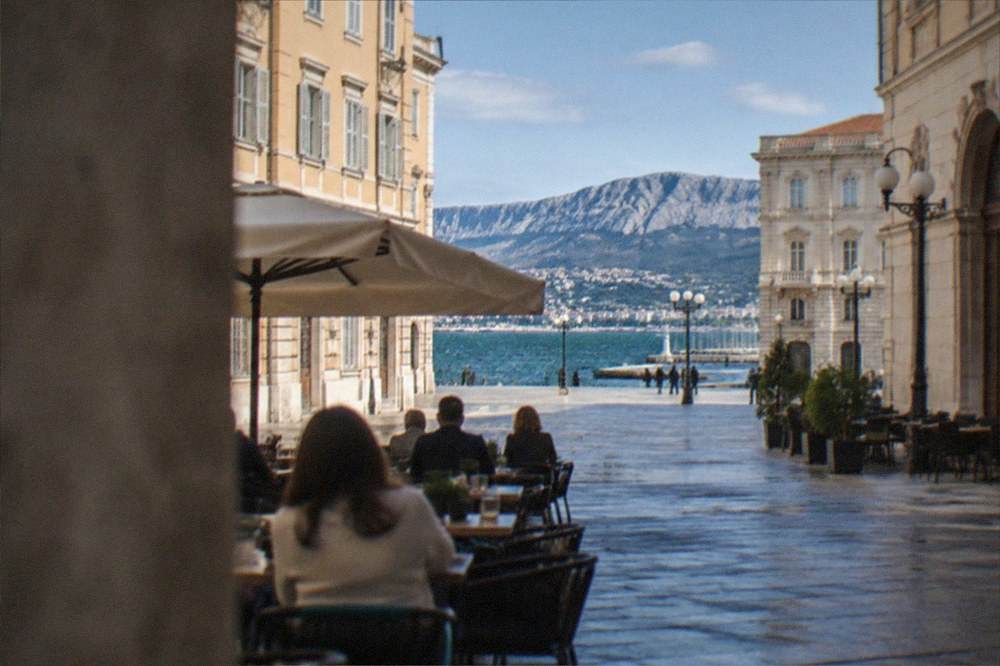
For food, the two anchors of a first evening are the buffet tradition, jota and goulash among the dishes, and the caffè culture that the city is known for. Both have full pages: What To Eat In Trieste, Trieste Coffee Culture and Best Restaurants In Trieste. If your flight lands on a spring or autumn weekend, the osmize, the Karst farmhouses selling their own wine under a frasca branch sign, may be open; the calendar lives at the volunteer-run osmize.com listing and the site's own guide is at Osmize Of The Carso.
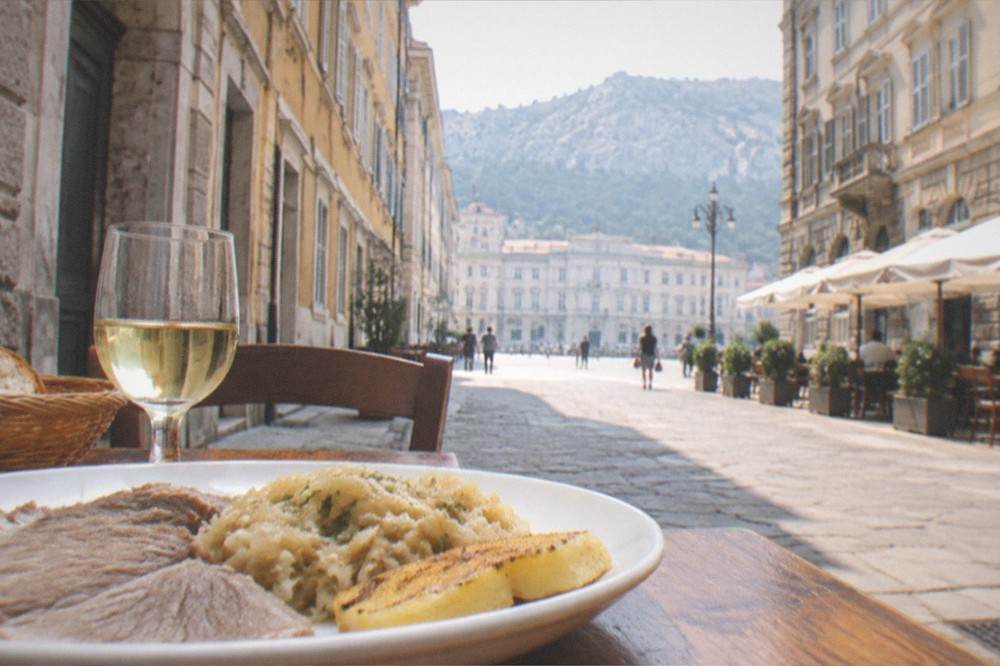
The food walk above runs three hours and covers the street-food side of the city's mixed Mediterranean and Central European kitchen. The listing says it is rated 4.7 from 123 reviews, from $85.98 per person, and the operator's live listing carries the current price and availability.
Where you sleep shapes the first day too, and the city's neighbourhoods differ sharply: the Borgo Teresiano grid, the Città Vecchia, the seafront at Barcola. The full breakdown, with the trade-offs of each, is in Where To Stay In Trieste, and if the trip is a long one, the swimming and beach options are in Trieste Beaches And Swimming.
Common Questions About Flights to Trieste, Italy
Which airport do you fly into for Trieste, Italy?
Trieste Airport (TRS) at Ronchi dei Legionari, which has its own railway station joined to the terminal by a covered walkway of roughly 400 m and is served by regional, Intercity and Frecciarossa trains.
How do you get from Trieste Airport to the city centre?
Take the train from the airport's own station, a short regional ride to Trieste Centrale, or a bus from the intermodal hub beside the terminal. The verified operator pages do not publish a fixed journey time or fare, so check the national rail operator's planner before you fly.
Is it better to fly to Venice and travel to Trieste?
For long-haul and many low-cost routes, Venice has the far wider network. Trieste is then reachable by direct train from Venice Santa Lucia or Venice Mestre, or by coach. TRS wins on simplicity; Venice wins on flight choice.
Do you need a passport to visit Slovenia from Trieste?
Carry one. Slovenia uses the euro and is in Schengen, but Italy is running temporary internal border checks on its land border with Slovenia from 19 June 2026 to 18 December 2026, so documents can be requested at that border.
Does Croatia use the euro for a day trip from Trieste?
Yes. Croatia adopted the euro and joined Schengen on the same day, 1 January 2023. No currency change is needed for Italy, Slovenia or Croatia.
What is the best month to fly to Trieste?
May through July for the driest, warmest combination: July is the second-driest month at 53.8 mm with a 28.2 C mean high. October suits Barcolana visitors, and November is the wettest month at 109.8 mm.
The flight is the least interesting part of a Trieste trip, and that is the good news: a rail-connected airport, a two-euro-class urban network and a centre you can walk in an afternoon mean the city starts working on you within an hour of the wheels touching down. Book the plane for the month that suits the weather table above, carry a passport if Slovenia is on the list, and let the rest of the arrival take care of itself.