Trieste on a Budget: What a Cheap Trip to Trieste, Italy Really Costs
Trieste, Italy, is one of the few Adriatic cities where the best of the place costs almost nothing: a free seafront, free museums on set days, a castle park that costs nothing to enter and a historic centre you can walk end to end without a ticket. Here is what a cheap trip actually costs, with every price checked against the official 2026 sources.
Short answer
A budget day in Trieste, Italy, can run on very little: urban bus and tram tickets are EUR 1.50-1.85, the cathedral, the Risiera di San Sabba and the Miramare park are free, and the tourist tax tops out at EUR 3.80 per night at a five-star hotel and EUR 1.50 at a campsite. The main paid sights cost EUR 7-17, and free first-Sunday entry applies at several state and civic museums.
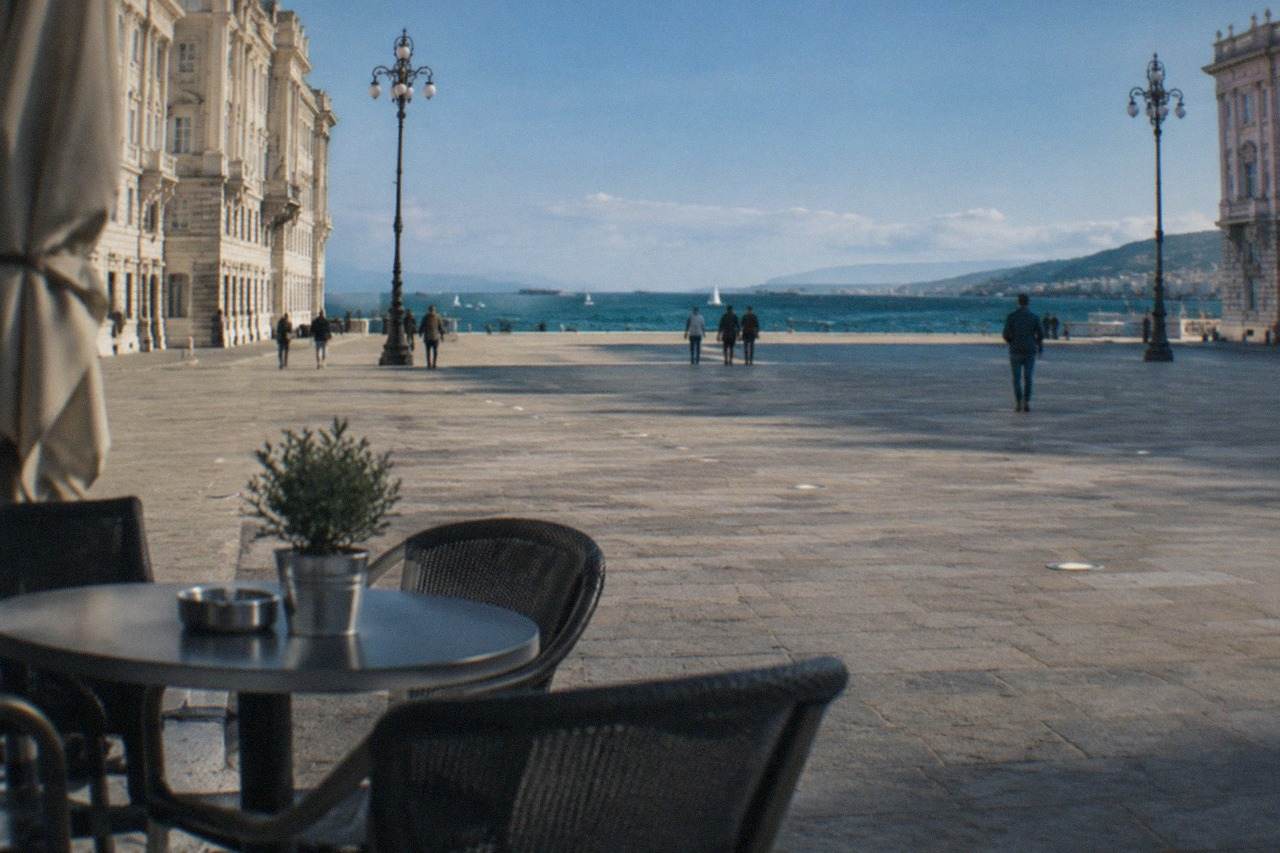
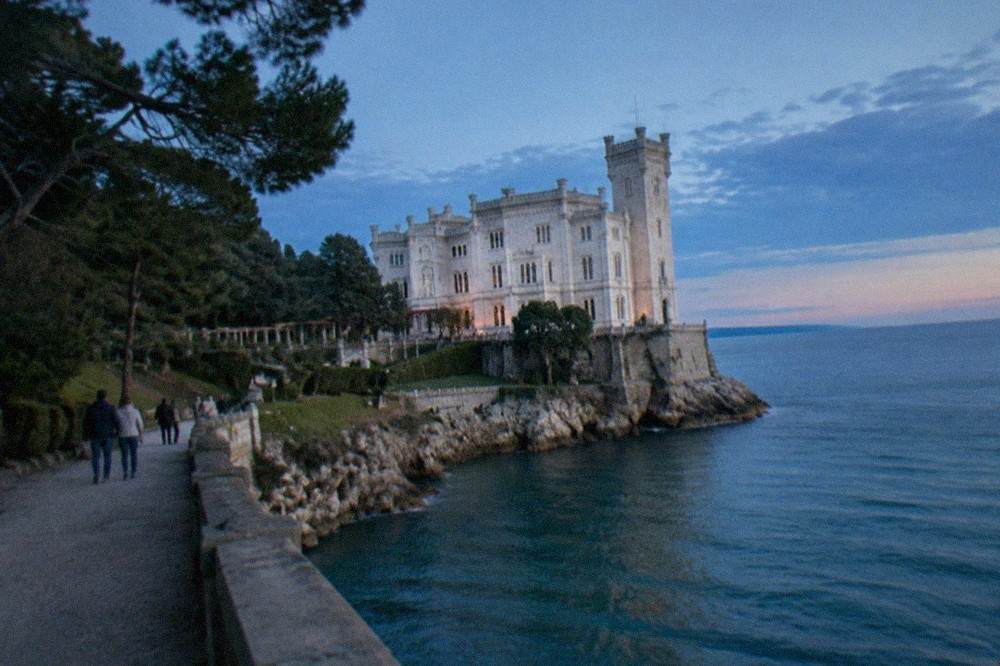
Trieste, the Adriatic port city in Friuli Venezia Giulia in the northeast of Italy, has a reputation problem that works in a budget traveller's favour: it is overshadowed by Venice two hours up the coast, so it has never developed the price machinery of a mass tourist destination. The seafront is free, the largest square on the water, Piazza Unità d'Italia, is free, the cathedral is free, and the single most photogenic castle park in the region, the park of Miramare, is free all year. What you pay for is the indoor stuff, and even there the 2026 price lists are modest by Italian standards. This guide lays out what a cheap trip to Trieste actually costs, using only figures the venues and the city's own 2026 tariff sheets publish.
How Much Does a Budget Trip to Trieste, Italy Actually Cost?
A frugal traveller in Trieste, Italy, can keep a full day to the cost of a transport ticket, one paid sight and simple food: the urban day ticket is EUR 3.35, the biggest paid museum, the Revoltella, is EUR 8.00, and the tourist tax at a three-star hotel is EUR 3.00 per person per night, capped at five consecutive nights. A day built on free sights, the seafront, the cathedral, the Miramare park and the Risiera di San Sabba, costs nothing in admission at all.
The honest answer is that Trieste rewards the traveller who spends on food and nothing else. The city's paid attractions cluster between EUR 7.00 and EUR 17.00, and several of the most memorable things in the city, standing on Molo Audace at sunset, watching the bora whip the gulf, looking down into the Roman theatre from the street, cost nothing because there is no gate to pay at.
Two structural things keep the city cheap. First, the civic and state museums run a free-entry scheme on the first Sunday of the month, and the ministry's programme has been running through 2026, though its details have changed before, so confirm the month's date on the venue's own page rather than assuming. Second, the tourist tax, which every visitor pays on top of the room, is capped by law at five consecutive nights in the same property, so a longer stay does not compound it. Our page on free things to do in Trieste covers the no-cost itinerary in depth.
What Are the Cheapest Ways to Get to Trieste, Italy?
Trieste is reached by plane, train or coach, and the cheapest options are the regional train and the long-distance coach: Trieste Airport has its own railway station joined to the terminal by a covered walkway of roughly 400 m, and Trenitalia regional, Intercity and Frecciarossa services run into Trieste Centrale, while Flixbus and Florentiabus operate long-distance coach routes into the city. Treat any specific transfer price you see quoted elsewhere with suspicion until you check the operator's own pages.
The airport, Ronchi dei Legionari (TRS), is unusually well connected for a small regional airport: its station is served by regional, Intercity and Frecciarossa trains, and the bus alternative leaves from the intermodal hub beside the terminal. The airport's own service charter describes the covered walkway with moving walkways, so the transfer from plane to train involves no shuttle bus and no taxi fare. Our full page on Trieste Airport covers the airlines and connections, and flights to Trieste lists who actually flies there.
If you are coming from Venice, the train is the standard budget route and the ride is a scenic one along the lagoon and Adriatic coast; our Venice to Trieste by train page walks through it, and Trieste's rail connections cover the station itself. Cruise passengers have the easiest transfer of all: the ships dock right next to the city, as our Trieste cruise port guide explains, and the centre is on foot from there.
The one thing worth knowing before you book is that Trieste is a border city, and the border rules are not what most guides say. Croatia joined the Schengen area and adopted the euro on the same day, 1 January 2023, and Slovenia has been in both since 2007, so there is no currency change on any day trip from Trieste. But Italy is running temporary checks on its land border with Slovenia until 18 December 2026, per the European Commission's own register, so carry a passport or national ID card if a Slovenian excursion is in your plan.
The cheapest ways to be shown around, once you are in the city, are also worth booking ahead rather than improvising, because the budget end of the tour market here is genuinely good value.
Where Should You Stay in Trieste on a Budget?
The tourist tax in Trieste in 2026 runs from EUR 1.50 per person per night at a campsite to EUR 3.80 at a five-star hotel, with two-star hotels, B&Bs, hostels, agriturismi and short-let apartments all at EUR 2.30, and it is charged for a maximum of five consecutive nights in the same property. Everyone under 18 is exempt, as are people with a certified disability of 80% or more and one companion per hospital inpatient.
The tax is the only accommodation figure the city publishes openly, and it is a useful planning floor: whatever your room costs, add roughly two to four euros per person per night, and no more after five nights. The room rate itself is date-specific and every booking source this site uses sits behind live pricing, so no honest page can quote one; what can be said is that the tax table's own structure tells you where the budget accommodation physically is, since campsites and motorhome areas are listed at the bottom of the table.
| Accommodation type | Tourist tax per person, per night |
|---|---|
| Five-star hotel | EUR 3.80 |
| Four-star hotel and self-catering case vacanza | EUR 3.30 |
| Three-star hotel and case vacanza | EUR 3.00 |
| Two-star hotel, affittacamere, B&B Superior, hostels, agriturismi, short-let apartments | EUR 2.30 |
| B&B Comfort | EUR 2.00 |
| One-star hotel and B&B Standard | EUR 1.80 |
| Campsites and equipped motorhome areas | EUR 1.50 |
For neighbourhoods, the standard budget advice holds: the Città Vecchia and the streets behind the Grand Canal put you walking distance from everything at a premium, while Borgo Teresiano, the grid of Habsburg-era blocks a little north, tends to be the value end of the centre. Our where to stay in Trieste page breaks the districts down properly, and the weekend in Trieste itinerary shows how little transport a well-placed hotel saves you.
What Is Free or Nearly Free to See in Trieste, Italy?
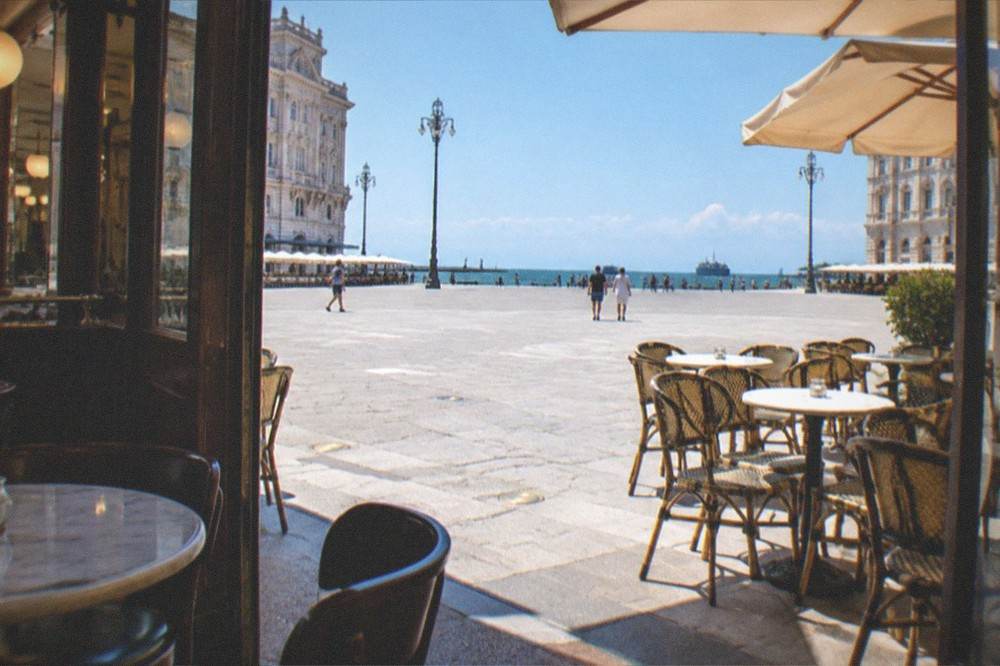
A large share of Trieste's best sights cost nothing: the Cattedrale di San Giusto is free, the Risiera di San Sabba national monument is free, the Miramare park is free all year, the Roman theatre is viewed free from the street, and the seafront from Piazza Unità d'Italia to Molo Audace is a free public space. The paid tickets that do exist run from EUR 7.00 at Castello di San Giusto to EUR 17.00 at Miramare.
The pattern to exploit is that Trieste's paid attractions are its indoor, roofed sights, while its most dramatic experiences are outdoors and ungateable. The bora wind, the city's defining weather event, arrives free of charge: ARPA's station tables for the molo record an all-time peak gust of 168.1 km/h in February 2012 and an average of 17.6 days a year with a gust over 90 km/h, and there is no published wind threshold at which anything closes, so you simply take the city as the weather gives it. Our bora wind page explains the phenomenon properly.
| Sight in Trieste | Admission | Notes from the venue's own pages |
|---|---|---|
| Cattedrale di San Giusto Martire | Free | Weekdays 8:00-18:30, Sundays 9:00-19:30; bell tower price not published |
| Risiera di San Sabba | Free | 1 March to 11 October daily 9:00-19:00, from 12 October daily 9:00-17:00 |
| Miramare park | Free all year | Park hours vary by month, e.g. April to September 8:00-19:00 |
| Miramare castle | EUR 17.00 | Daily 9:00-19:00, ticket office closes 18:30 |
| Castello di San Giusto | EUR 7.00 | Free first Sunday of the month and on 3 November |
| Museo Revoltella | EUR 8.00 | Daily 10:00-19:00, closed Tuesdays |
| Grotta Gigante | EUR 15.00 | Guided tours only, booking compulsory |
| Teatro Romano | Free, from the street | Not routinely enterable by individuals |
Two timing tricks stretch this list further. The first-Sunday scheme covers the participating state and civic museums, and the free days at San Giusto also include 3 November, the patron saint's day, which the castle's own site states outright. And the Miramare park, which the Ministry of Culture's own visit page describes as free all year, is a genuine half-day out on its own, with the seafront at Barcola continuing the same free walk along the water; our Barcola seafront and Miramare Castle pages cover both.
The swimming is free too. The sea in the Gulf of Trieste warms from a February minimum to August maxima around 25.9 C in ARPA's oceanographic series, with the sea retaining heat into September, so the free beach season is long if you are not fussy about sand. Our Trieste beaches and swimming page has the full picture, including the historic free bathing establishment at Pedocin.
How Do You Eat Cheaply in Trieste?
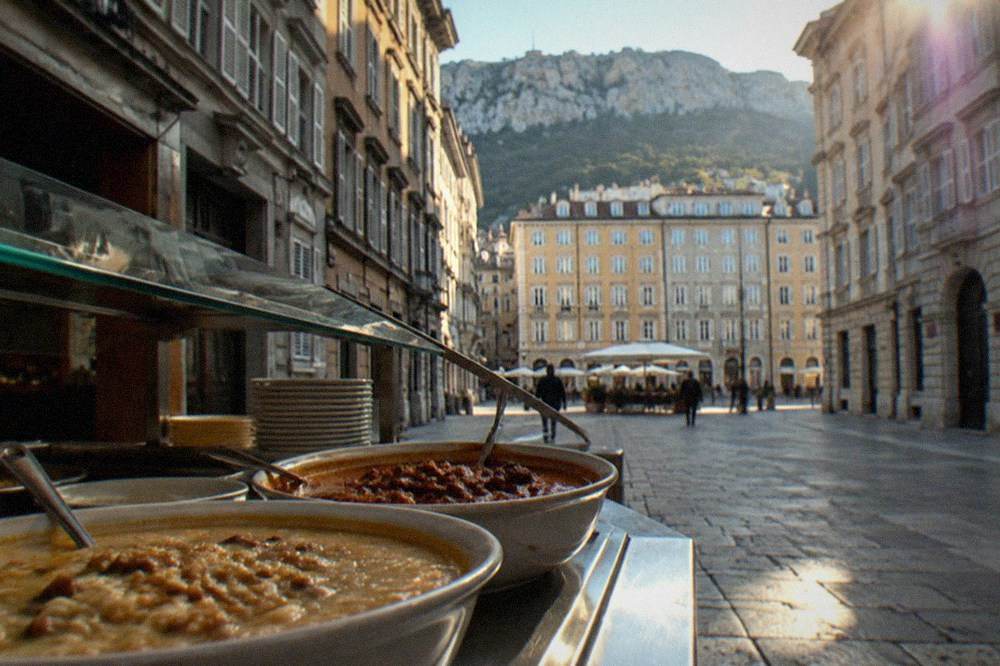
The cheapest way to eat well in Trieste is the city's own historic institutions: the buffet, a Triestine counter restaurant serving jota, goulash and pork, and the osmiza, a Karst farmhouse selling its own wine and produce direct for a limited season, signposted by a frasca branch at the roadside. Neither requires a booking platform or a set menu price, and the opening calendar for the osmize is published at osmize.com with addresses and a map.
The buffet is the budget eater's best friend in the centre: it is the city's traditional workers' canteen, and our page on jota, goulash and the Trieste buffet explains the format and what to order. Our what to eat in Trieste guide covers the full food culture, and the best restaurants in Trieste includes the inexpensive end of the spectrum, but the structural point is this: Triestine food culture was built for port workers and clerks, not for visitors, and the institutions that survived are the ones that were always cheap.
The osmize are the deepest value in the region. A farmer opens the cellar for a limited period, hangs the frasca, and sells glasses of the Carso's own wines, Vitovska, Malvasia and Terrano, alongside home-cured meats and cheeses. The custom is old and observable; the legal history behind it is not verified against a primary source, so this site writes the custom and the branch, not the decree. The practical planning tool is the osmize.com calendar, which lists who is open when. Our osmize of the Carso page covers the tradition, and Friuli Venezia Giulia wine covers what is in the glass.
Coffee is the other cheap pleasure, and it needs care in the writing. Trieste is a historic coffee port and roasting centre, and the caffè culture is real and central to the city's identity; the widely repeated per-head consumption figures have no primary source behind them, so this site does not print one. What is true and useful is that standing at the bar in a historic caffè is the local way and the cheap way, and our Trieste coffee culture page explains the ritual, the historic cafès and what to order.
How Do You Get Around Trieste Cheaply?
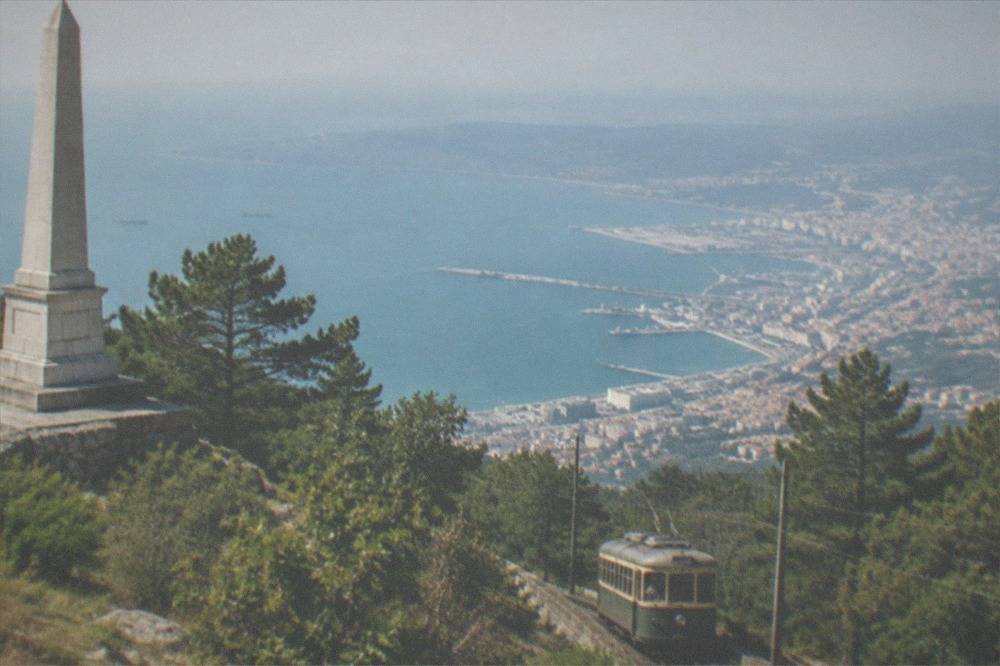
Trieste's urban transport in 2026 is priced for residents, not tourists: a 60-minute single ticket is EUR 1.50, a 75-minute single is EUR 1.85, a day ticket is EUR 3.35 and a 10-ride carnet is EUR 13.50, and contactless bank cards can be tapped directly on board, with the system applying the cheapest applicable fare. The Opicina tram, line 2, is part of the ordinary urban network, so a standard ticket covers it.
The tariff is published in Trieste Trasporti's own 2026 urban tariff sheet, and the contactless detail matters for budget travellers: you do not need to find a ticket machine before boarding, and the fare system settles to the cheapest option rather than punishing you for not pre-buying. Single tickets run 60 or 75 minutes, extended to 240 minutes on Sundays and public holidays, which makes a Sunday the cheapest day to move around the city.
| Ticket (Trieste Trasporti, 2026 urban tariff) | Price | Validity |
|---|---|---|
| Urban single U01 | EUR 1.50 | 60 minutes |
| Urban single U02 | EUR 1.85 | 75 minutes |
| Day ticket U24 | EUR 3.35 | One day |
| 10 rides U10 | EUR 13.50 | 10 journeys |
| 20 rides U20 | EUR 16.65 | 20 journeys |
The tram deserves its own paragraph because almost every guide gets it wrong. The tram de Opicina was reactivated on 1 February 2025 after the long stop that followed the August 2016 accident, and it runs today on a timetable dated 20 July 2026. Its city terminus is piazza Dalmazia, not piazza Oberdan, and the route runs up through Vetta Scorcola and Conconello to Opicina at the top of the Karst escarpment. For the price of an ordinary urban ticket you get one of the strangest and most scenic tram rides in Europe, and the live status is on the operator's own site, since short maintenance suspensions happen and are announced there. Our Opicina tram and obelisk page has the full story.
Beyond the tram, the honest budget answer is that you mostly walk. The centre is compact, the seafront is continuous, and the free sights are strung along it; our getting around Trieste page covers the buses, the tram and the taxis for the days your legs disagree.
What Are the Best Cheap and Free Tours in Trieste?
The cheapest paid tour in the city is a self-guided scavenger hunt at $4.67 per person, followed by a self-guided audio walk at $7.59 per person, while the lowest-cost guided option with a live guide starts at $50.44 per person for a 2.5-hour city-centre walk. There is also a genuinely free option: a GuruWalk pay-what-you-want city walk, tip-based, run by a local guru, which this site lists but does not operate.
The self-guided end of the market suits the budget traveller in Trieste particularly well, because the city is compact and the signage is decent. The Trieste Walking Tour with Audio and Written Guide by a Local is the related pick on this page for exactly that reason: it costs less than a museum ticket, it has no schedule, and it is built by a local rather than a content team. Check availability on the operator's live listing before you travel.
The free end needs the honesty note. The pay-what-you-want walk, Discover Trieste on a walking tour, runs on GuruWalk, a platform for tip-based walks led by independent guides, and the individual guru who runs it is the operator, not this site and not a tour company. You pay nothing up front and tip what the walk was worth. Our free walking tours in Trieste page compares the options, including a second GuruWalk free walk covering the Old Port, a district only opened to the public in recent years.
Between free and full-price sits the scavenger hunt format, which turns the sights into a puzzle and costs about the same as a caffè stop.
| Budget tour option in Trieste | Format | From price | Rating | Duration |
|---|---|---|---|---|
| Scavenger Hunt and Highlights Self-Guided Walking Tour | Self-guided | $4.67 per person | 4.6 from 28 reviews | 2 hours |
| Walking Tour with Audio and Written Guide by a Local | Self-guided audio | $7.59 per person | 4.5 from 105 reviews | About 2.5 hours |
| Bus Tour with Audio Guide | Hop-on sightseeing bus | $19.49 per person | 4.3 from 2,638 reviews | 1.5 hours |
| Discover Trieste on a walking tour | GuruWalk free walk, tip based | Free | 4.86 from 50 reviews | Varies with the guru |
What Are the Best Budget Day Trips from Trieste?
The cheapest day trips from Trieste are the ones the border makes easy: Slovenia and Croatia both use the euro and are both in Schengen, with Croatia having joined both on 1 January 2023, so there is no currency exchange and no routine passport control, though Italy is running temporary checks on the Slovenia land border until 18 December 2026 and you should carry ID. The organised day trips start at $108.91 per person for a Ljubljana and Lake Bled tour from the city.
The organised options are not budget-priced, but they solve a real problem: cross-border public transport from Trieste is limited, the coach operators run services to Ljubljana, Piran, Rijeka and Pula without publishable timetables from the sources this site trusts, and a self-planned Slovenian day can eat a whole morning in connections. The Piran and Slovenia coast tour at $114.64 per person, rated 4.57 from 136 reviews over 6 hours, is the standard coastal pick, and the Ljubljana and Lake Bled trip at $108.91 per person, rated 4.69 from 544 reviews over 9 hours, is the standard inland one.
| Day trip from Trieste | From price | Rating | Duration |
|---|---|---|---|
| From Trieste: Ljubljana and Lake Bled | $108.91 per person | 4.69 from 544 reviews | 9 hours |
| From Trieste: Piran and Slovenia Coast Tour | $114.64 per person | 4.57 from 136 reviews | 6 hours |
| From Trieste: Postojna Cave and Predjama Castle | $137.57 per person | 4.76 from 543 reviews | 6 hours |
| Lipica Stud Farm and Škocjan Caves from Trieste | $129.93 per person | 4.86 from 23 reviews | 6 hours |
| Sgonico (Trieste): Grotta Gigante Guided Tour and Museum Entry | $17.20 per person | 4.78 from 151 reviews | 1 hour |
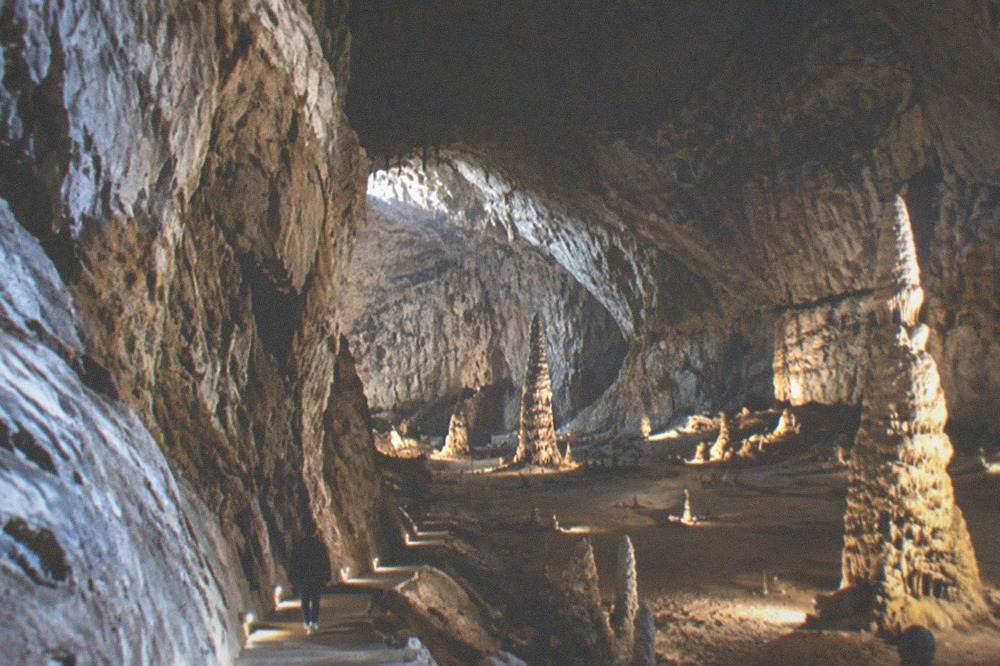
The genuinely budget day trip is the last row: Grotta Gigante is in the Karst immediately above the city, reachable on the ordinary urban network that also serves the Opicina tram line's upper end, and the cave's own price list charges EUR 15.00 for a guided visit with booking compulsory. It is the one headline attraction where the transport costs EUR 1.50 rather than a tour fare. Our Grotta Gigante page covers the visit, and the wider options are laid out in day trips from Trieste.
When Is the Cheapest Time to Visit Trieste?
The cheapest time to visit Trieste is the shoulder season, and the climate data shows a real trade-off: the wettest months are November at 109.8 mm and September at 102.3 mm, while July is the second driest at 53.8 mm and June is the calmest month for wind. The dry, calm summer is the expensive window, and the cheap months are the wet, windy ones. October brings the Barcolana regatta, free to watch, running 2-11 October in 2026.
The numbers come from ARPA FVG's own station tables for the molo Fratelli Bandiera, and they overturn the lazy assumption that Trieste is a rainy city in summer. July and August are among the driest months, and the rain concentrates in autumn. What the shoulder months buy you, besides lower demand, is the bora season: the wind blows hardest from November through March, peaking in February, and the monthly record gust exceeds 110 km/h in every month of the year, so a budget trip in the cheap season should pack for wind rather than for rain alone.
| Month in Trieste | Mean temperature | Rain | Wet days | Sea temperature |
|---|---|---|---|---|
| April | 14.0 C | 60.7 mm | 8.0 | 14.0 C |
| May | 18.8 C | 75.0 mm | 8.5 | 17.9 C |
| June | 23.1 C | 62.5 mm | 6.1 | 23.1 C |
| July | 25.2 C | 53.8 mm | 5.4 | 25.9 C |
| September | 21.2 C | 102.3 mm | 7.4 | 23.9 C |
| October | 17.1 C | 88.6 mm | 7.6 | 20.3 C |
The Barcolana is the one event that changes the calculus. The regatta, the largest sailing race in the world by its 2018 entry record of 2,689 boats, fills the city in the second week of October, and watching it from the seafront costs nothing. Our Barcolana regatta page covers the event, and the best time to visit Trieste and Trieste weather month by month cover the planning in full.
How Do You See Trieste on a Budget Without Missing Anything?
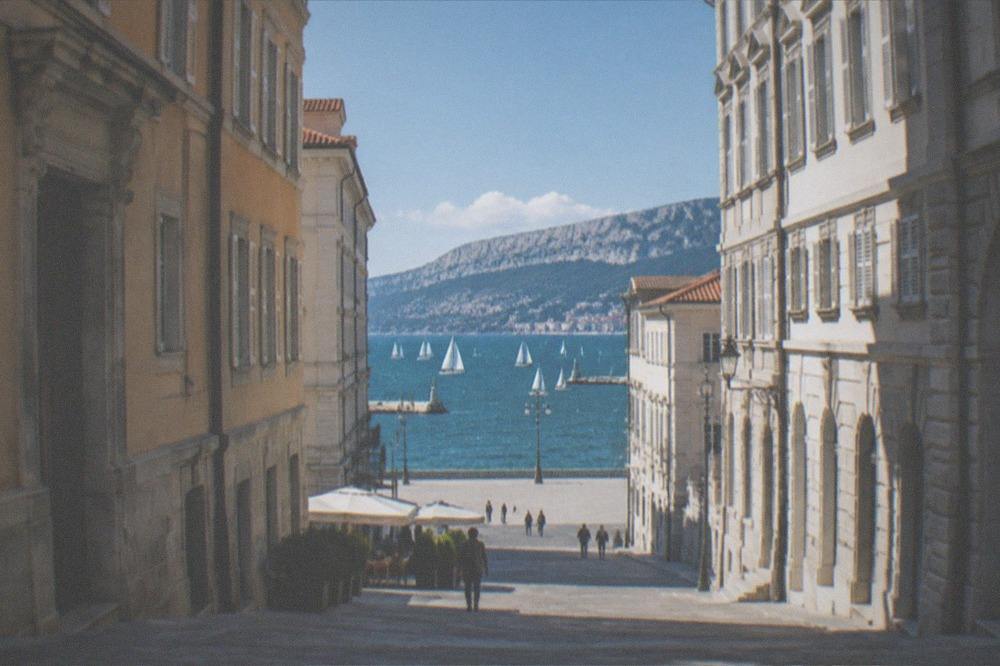
Build the trip around the free spine of the city: the seafront from Piazza Unità d'Italia along the Rive to Molo Audace, the Città Vecchia, the free cathedral and the free Risiera di San Sabba. Then spend selectively on the two or three paid sights that matter to you, using the first Sunday of the month for free museum entry, the EUR 3.35 day ticket for transport and the buffets and osmize for food.
The practical sequencing matters more here than in most cities, because Trieste's paid sights are scattered between three clusters: the San Giusto hill in the centre, Miramare up the coast, and the Karst above. A budget traveller who tries to see all three in one day spends the savings on transport; one who gives each cluster a half-day spends almost nothing. Our one day in Trieste and three days in Trieste itineraries show the sequencing, and the same logic runs through every route on this site.
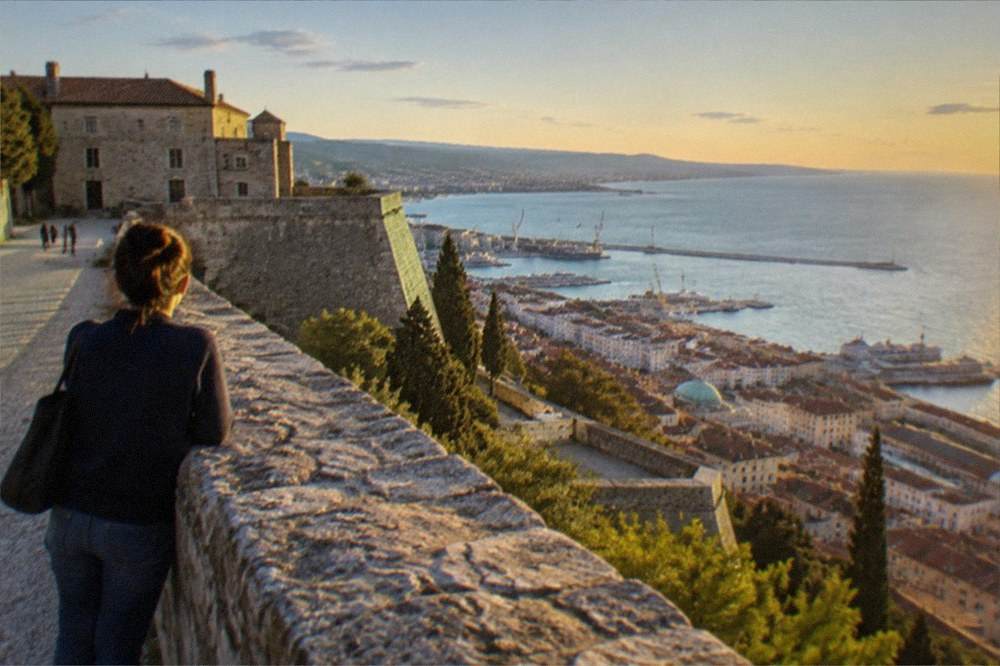
For the deeper background that makes the free sights mean something, read why Trieste is famous and a short history of Trieste on Trieste Travel Guide, and for the unconventional free stuff, unusual things to do in Trieste collects the corners most visitors walk past.
If you want a guide without the guide price, the middle band of the market is where the value sits this year.
Common Questions About Trieste on a Budget
Is Trieste, Italy expensive to visit?
Compared with Venice and the other big Italian tourist cities, no. The paid attractions cost EUR 7.00-17.00, the urban day transport ticket is EUR 3.35, the cathedral and the Risiera di San Sabba are free, and the tourist tax tops out at EUR 3.80 per person per night at a five-star hotel and EUR 1.50 at a campsite, charged for a maximum of five consecutive nights.
What is free to do in Trieste?
The seafront and Piazza Unità d'Italia, the Cattedrale di San Giusto, the Risiera di San Sabba, the Miramare park all year, the view down into the Roman theatre from the street, and the Barcolana regatta watched from the shore every October. Several museums also open free on the first Sunday of the month, though the scheme's details have changed before, so check the venue's own page for the month you are there.
How much is public transport in Trieste?
Per the 2026 urban tariff, a 60-minute single is EUR 1.50, a 75-minute single is EUR 1.85, a day ticket is EUR 3.35 and a 10-ride carnet is EUR 13.50. Contactless bank cards can be tapped on board and the system applies the cheapest applicable fare. The Opicina tram is part of the ordinary urban network.
Do I need cash for a day trip to Slovenia or Croatia from Trieste?
No currency exchange: Italy, Slovenia and Croatia all use the euro, and Croatia joined Schengen and the euro on the same day, 1 January 2023. Do carry a passport or national ID card, because Italy is running temporary checks on its land border with Slovenia through 18 December 2026.
What is the tourist tax in Trieste?
Between EUR 1.50 and EUR 3.80 per person per night depending on the accommodation category, per the Comune di Trieste's 2026 table, charged for a maximum of five consecutive nights in the same property. Everyone under 18 is exempt, along with people with a certified disability of 80% or more and one companion per hospital inpatient.
Is the Opicina tram included in a normal ticket?
Yes. The tram de Opicina is urban line 2, running from piazza Dalmazia to Opicina, and a standard Trieste urban ticket covers it. It was reactivated on 1 February 2025 and runs on a current timetable; check the operator's site for any short-notice maintenance suspension.